How to Organize a Kitchen With No Pantry
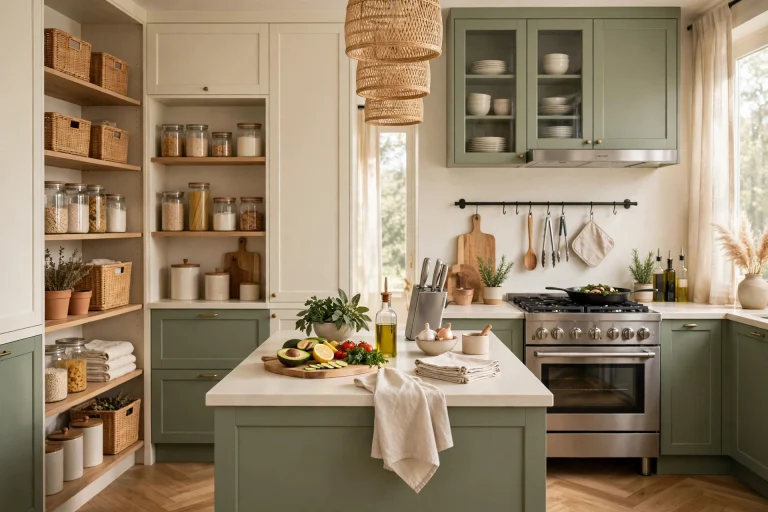
A kitchen with no pantry is not a broken kitchen. It is a kitchen whose storage is spread out instead of gathered in one cupboard, and that only becomes a problem when food has no assigned home. Once every group of food has a zone — a shelf, a drawer, or a bin — a no-pantry kitchen can be just as easy to cook in as one with a walk-in.
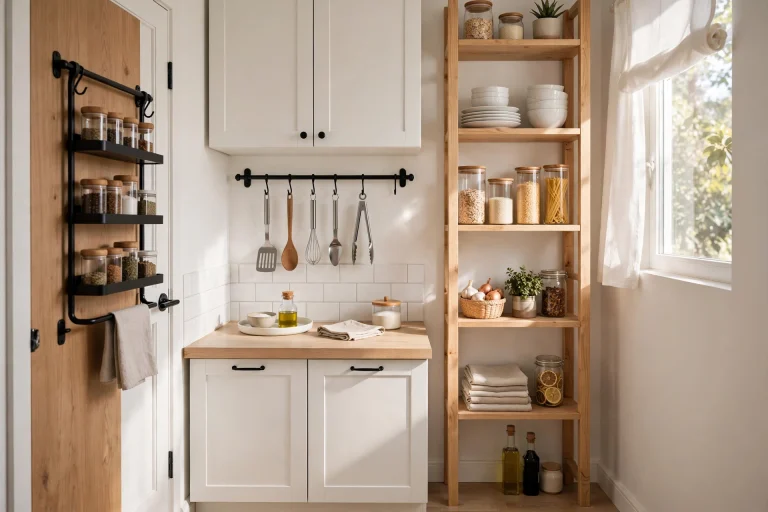
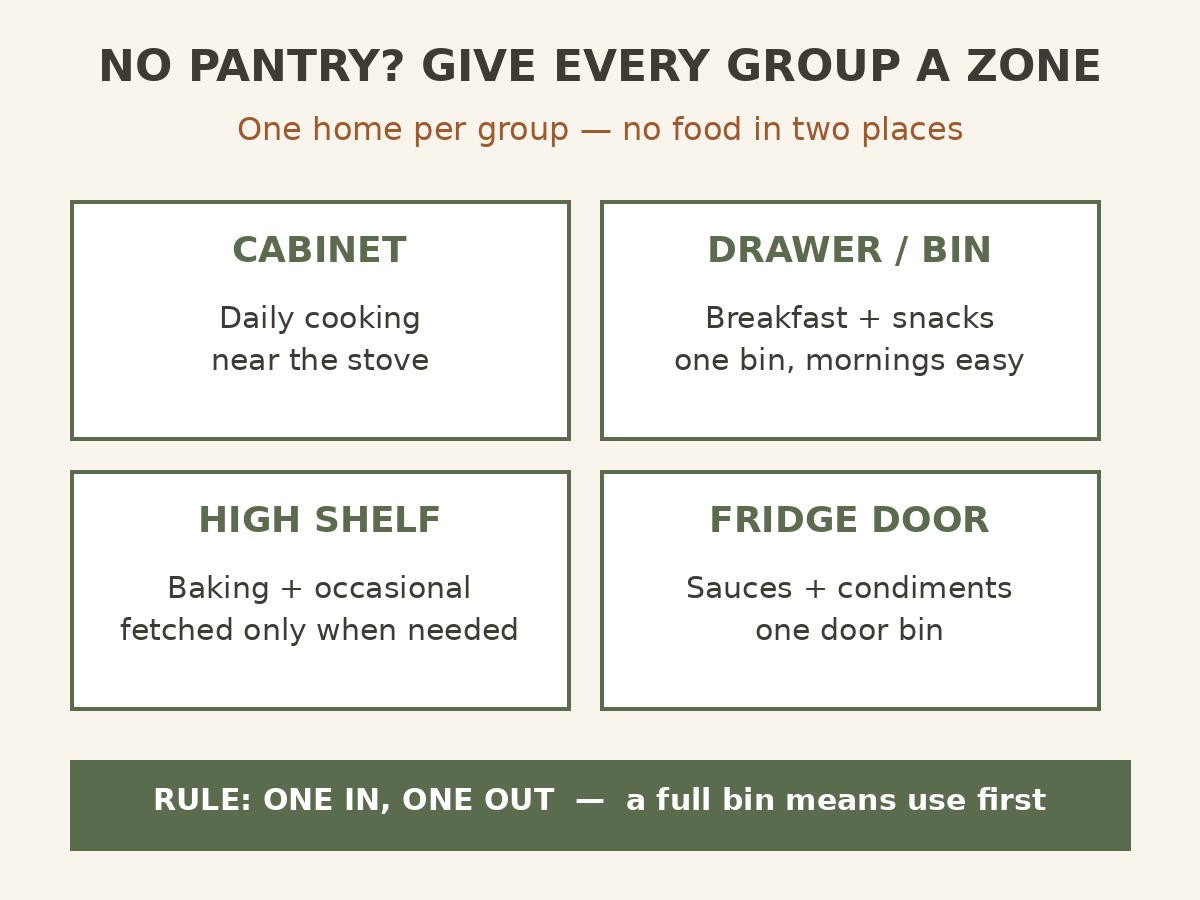
The first step is to stop looking for a pantry and start looking for zones. A pantry is really just four jobs done in one place: daily cooking ingredients within reach, backup stock out of the way, breakfast and snacks in one spot, and baking or occasional items stored higher. Those four jobs can live in four different places, as long as each one is consistent. The cook should be able to reach for the same shelf every time, without opening five cupboards to find the rice.
Step 1: Take stock, then shrink the stock
Before assigning a single shelf, pull the food out of every cupboard, drawer, and counter corner and look at it together. A no-pantry kitchen punishes duplicates and half-empty boxes more than a pantry kitchen does, because there is nowhere to hide them. Three open bags of the same pasta, two jars of the same spice, and a sauce bought twice are not a storage problem — they are a buying problem, and they are eating the little space there is.
Keep what you actually cook with in the next few weeks, and move the rest out: finish it, freeze it, or give it away. The goal is not a bare kitchen. It is a kitchen where everything left has earned its place. How to Declutter a Kitchen Before You Organize It uses the same full pull-out for exactly this reason — you cannot zone food you have not seen all at once.
Step 2: Give each food group one zone
Assign one home per group, and write it down if it helps the household stick to it:
- Daily cooking: oils, salt, pepper, and the grains or pasta you cook weekly — the cabinet nearest the stove, at eye or waist level.
- Breakfast and snacks: cereal, oats, coffee, tea, and snacks — one shelf or one bin, so mornings do not become a search.
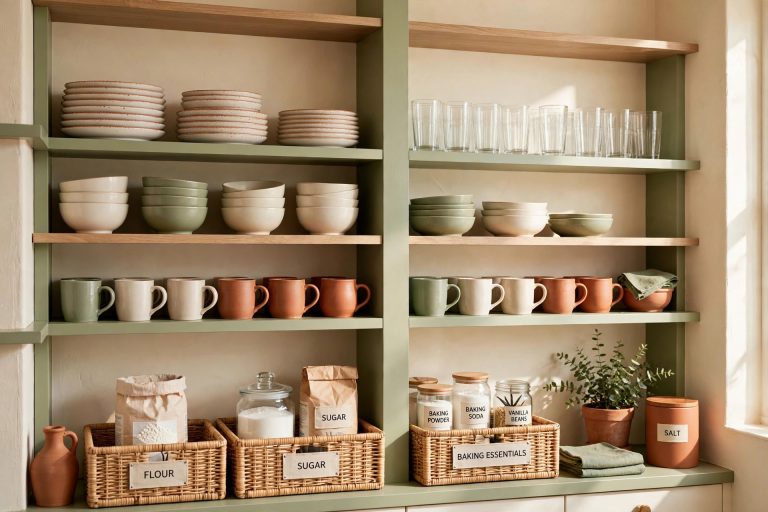
- Baking and occasional: flour, sugar, baking powder, and special ingredients — a higher shelf or the back of a deep cabinet, fetched only when baking.
- Backup stock: the second bag, the extra tin, the bulk buy — the hardest shelf to reach, or the top of a cabinet, clearly labelled.
One zone per group matters more than the size of any zone. If pasta lives in two places, both places will drift into clutter. If it lives in one bin on one shelf, anyone putting shopping away knows exactly where it goes.
Step 3: Use cabinets like a pantry, shelf by shelf
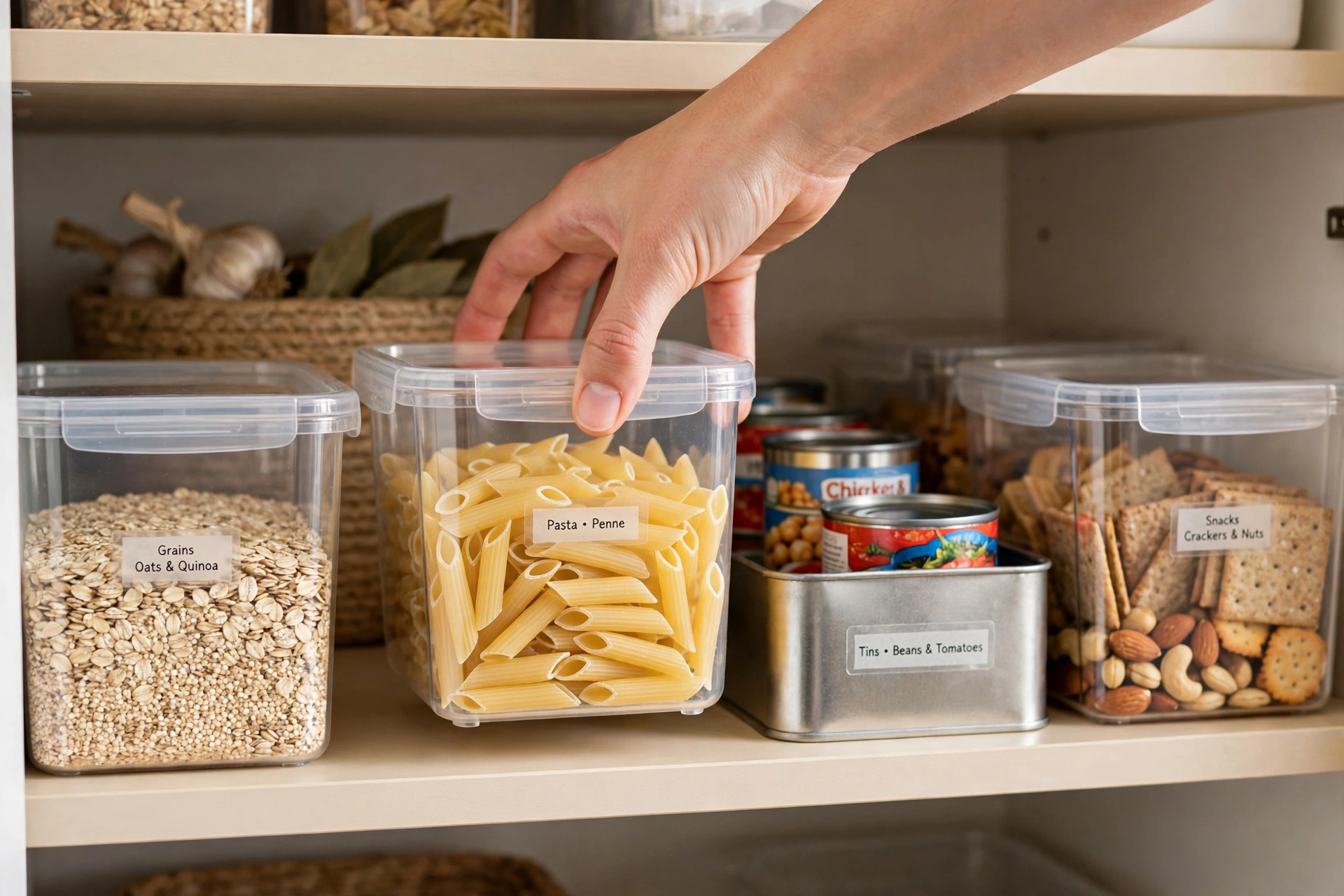
Treat each cabinet shelf as a pantry shelf, not as a cupboard to fill from the front. The front of a shelf is for daily items; the back is for backup, and only in clear bins that can be pulled out whole. A bin per group — one for grains, one for tins, one for snacks — turns a deep cabinet into a set of small drawers. Pull the bin out, take what you need, slide it back. Nothing gets lost behind the front row.
This is the same principle behind deep-shelf storage in a pantry: How to Organize Deep Pantry Shelves (Bins, Risers, Turntables) works because bins and risers make the back of a shelf reachable. In a no-pantry kitchen, the cabinet shelf is the pantry shelf, so it deserves the same treatment — bins first, loose bags never.
For a small kitchen, the same zone idea keeps counters clear too: How to Organize a Small Apartment Kitchen in 7 Steps (Renter-Friendly) puts everything where its task happens, and a no-pantry kitchen benefits from exactly that discipline — food lives in its zone, not on the counter by default.
Step 4: Add one visible shelf for the daily dozen
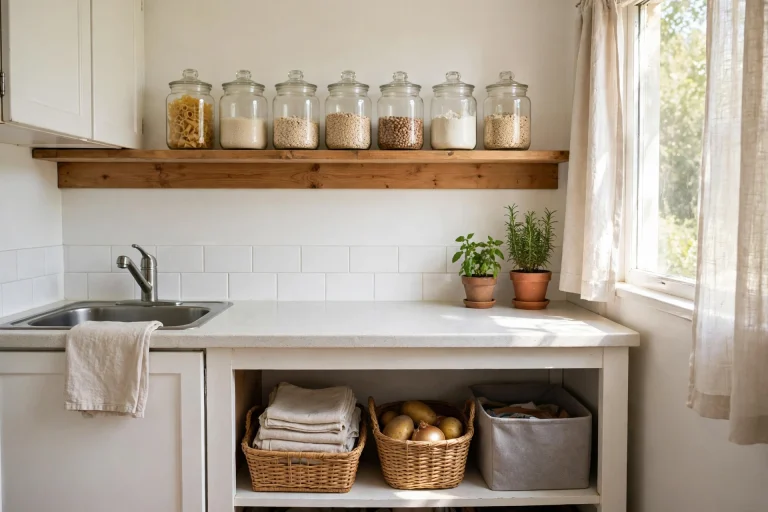
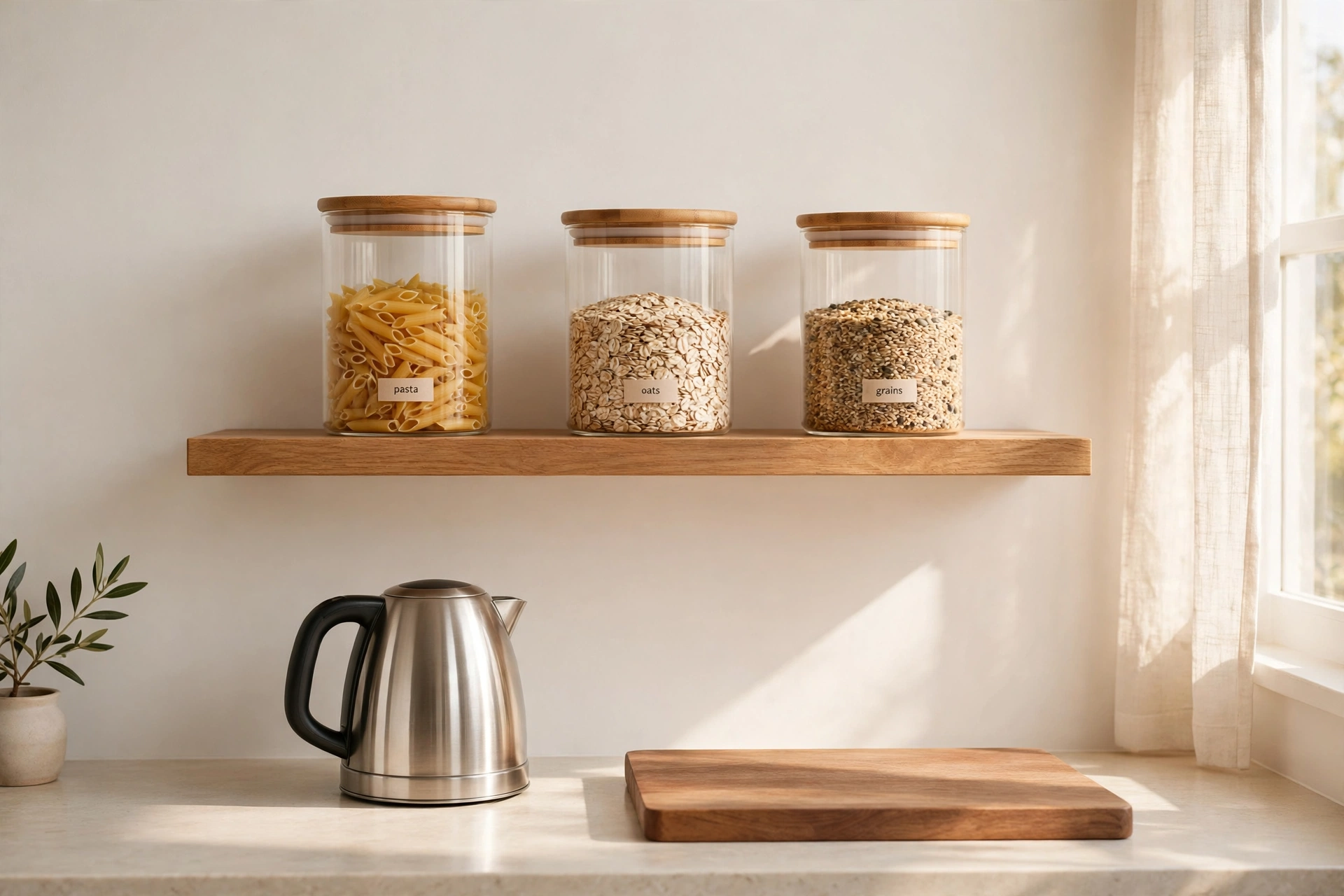
If cabinet space is tight, one open shelf — above a counter, beside the stove, or on a free stretch of wall — can carry the dozen items you reach for most: oils, the salt and pepper, the coffee, the oats, the pasta you cook weekly. Keep it to one shelf, and keep it to daily items only. A single tidy shelf looks intentional and saves a dozen cupboard openings a day. Three crowded shelves become a display that needs dusting and works around.
Choose clear containers with labels for the shelf, and keep them uniform. Uniform containers are not about looks alone: they stack, they pour cleanly, and they show at a glance what is running low. For the step-by-step version of a small pantry setup, How to Organize a Small Pantry Step by Step covers the same clear-container habit in detail.
Step 5: Let the fridge and freezer carry their share
A no-pantry kitchen should not ask cabinets to do everything. The fridge door is a pantry shelf for sauces, condiments, and anything that keeps better cold; the freezer is backup storage for bread, extra butter, and bulk buys. Moving even a few groups out of the cabinets frees a whole shelf. Just keep the same one-zone rule: sauces in one door bin, not scattered across two shelves and a drawer.
Step 6: Run a one-in, one-out rule at shopping time
A no-pantry kitchen stays organized only if shopping respects the zones. When a new bag comes in, it goes into its group’s bin — and if the bin is full, something in it gets used first or moved out. This is the same weekly discipline as How to Keep a Kitchen Organized: A Weekly 15-Minute Reset Routine: a short, regular check beats a big clear-out. Spend two minutes after putting shopping away checking that each bin still closes, each label still matches, and nothing has crept onto the counter.
If something keeps ending up in the wrong zone, the zone is wrong, not the person. Move the group closer to where it is used — breakfast near the kettle, baking near the oven — and the system will start keeping itself.
Summary table
| Rule | What to do | Watch out for |
|---|---|---|
| Shrink first | Pull all food out, keep only what you cook with soon | Duplicates and half-empty bags eat the little space there is |
| One zone per group | Daily, breakfast, baking, and backup each get one home | The same food in two places means neither place stays tidy |
| Bins in cabinets | One clear bin per group, pulled out whole | Loose bags at the back of a shelf are lost food |
| One visible shelf | Daily dozen only, uniform labelled containers | A second and third shelf become clutter, not storage |
| Fridge carries its share | Sauces and condiments in one door bin | Scattering groups across fridge shelves and drawers |
| One in, one out | New shopping goes into its bin; a full bin means use first | Shopping that lands on the counter becomes permanent |
Frequently Asked Questions
Where do I store food if I have no pantry at all?
Split the pantry’s four jobs across the kitchen: daily cooking near the stove, breakfast in one bin, baking on a high shelf, and backup on the hardest-to-reach shelf. One zone per food group matters more than one big cupboard.
How do I keep a no-pantry kitchen from looking cluttered?
Keep food in cabinets and bins, and limit visible storage to one tidy shelf of daily items in uniform containers. Counters stay clear when every group has a cabinet zone to return to.
What containers work best without a pantry?
Clear, uniform containers with labels, sized to their bin — so you can see what is low, stack neatly, and pull a whole group out at once. Loose bags and mixed boxes are what make cabinet shelves feel chaotic.
Should I buy in bulk if I have no pantry?
Only for things you use weekly, and only as much as the backup zone holds. Bulk buys that do not fit their bin end up on counters and floors, which defeats the point.
How often should I re-check the zones?
A two-minute check after shopping, plus a full pull-out a few times a year. If a group keeps drifting, move its zone closer to where it is used rather than fighting the habit.
Shop This Guide’s List
Prefer to shop it all in one place? Every product in this guide is collected in our Benable list: No Pantry, No Problem: Bins, Risers & One Shelf That Give Every Food Group a Home — tap any item to see it at the store.