Kitchen Countertop Decluttering: What Earns Counter Space and What Doesn’t
Countertops fill up for a simple reason: everything that has no other home ends up there. The mail, the appliance you use twice a year, the second spatula set, the bowl waiting to be put away — each one takes a little space, and together they leave nowhere to actually cook. Clearing the counter is not about owning less in general. It is about deciding, honestly, what earns the most valuable real estate in the kitchen.
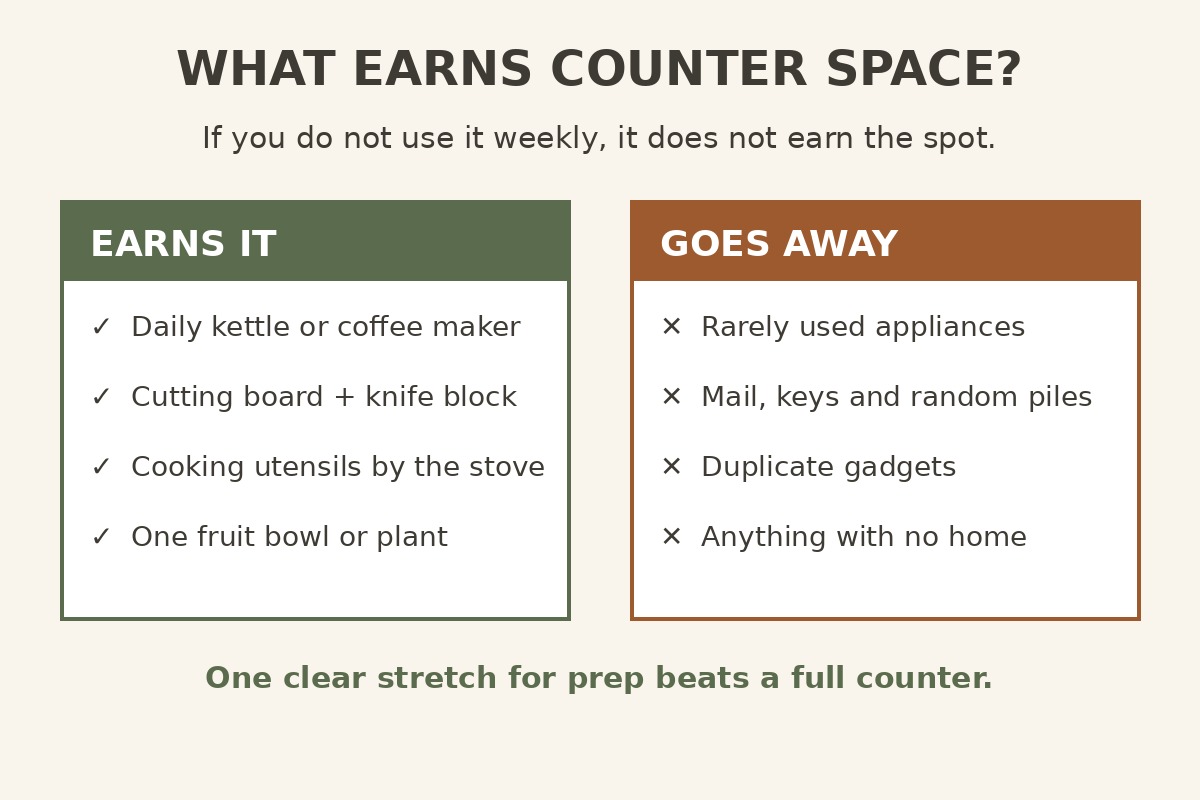
The rule that makes the decision easy is frequency. If you use something at least weekly, it earns a counter spot. If you use it less often, it belongs in a cabinet, on a shelf, or out of the kitchen altogether. That single test clears most counters without a single argument about what is “essential” in the abstract.
Step 1: Empty the counter completely, then sort by use
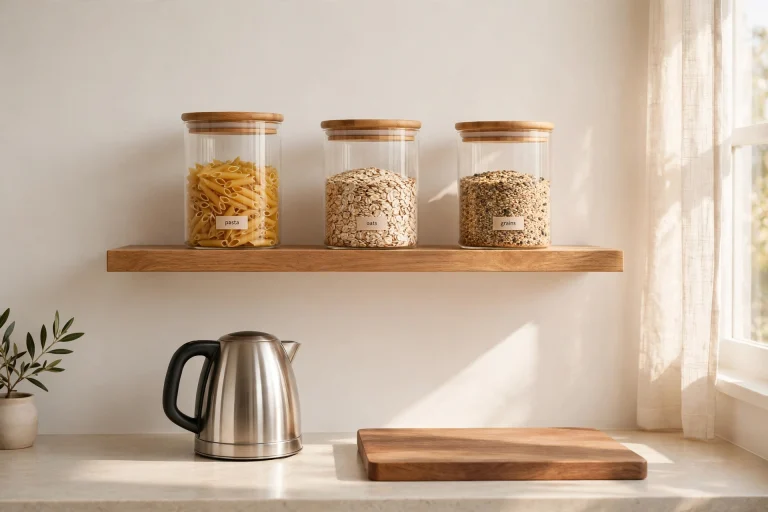
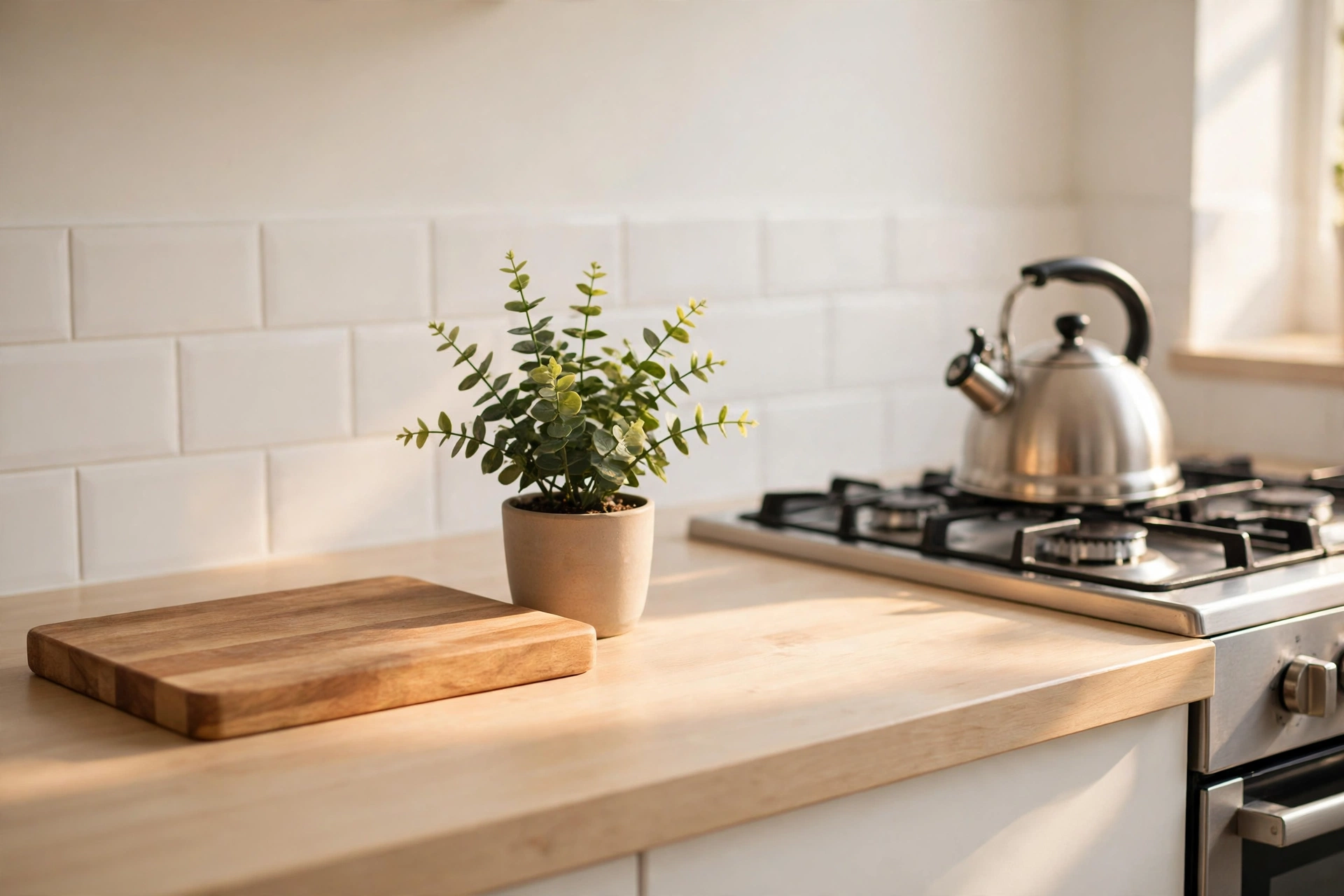
Do not tidy around the edges. Take everything off the counter, wipe it down, and sort what was there into three groups: daily, weekly, and rarely or never. Daily means you reach for it almost every day — the kettle, the coffee maker, the cutting board. Weekly means a few times a week — the knife block, the cooking utensils by the stove. Rarely means monthly or less, or “I might need it one day.”
This is the same sorting habit that works before any organizing project. How to Declutter a Kitchen Before You Organize It starts with a full pull-out for exactly this reason: you cannot judge what you use when half of it is hidden behind something else. Once the counter is empty, the rarely group is usually bigger than expected — and that is the point.
Step 2: Put back only the daily and weekly items
Put the daily items back first, in the zone where you use them: the kettle near the stove or sink, the cutting board where you prep, the utensils beside the hob. Weekly items go next, but only if there is still a clear stretch left for prep. If a weekly item means you lose your only prep space, it does not earn the counter either — it earns the nearest cabinet.
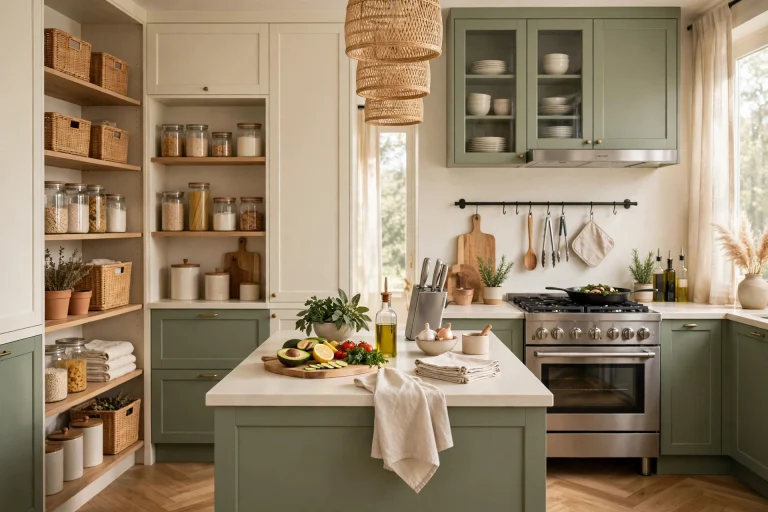
Keep one clear stretch of counter, at least wide enough for a cutting board, completely empty. That empty stretch is not wasted space. It is the space where cooking actually happens, and protecting it is the whole purpose of the exercise. A counter that is full of useful things but has nowhere to chop is still a cluttered counter.
Step 3: Give the rarely group a real home — or let it go
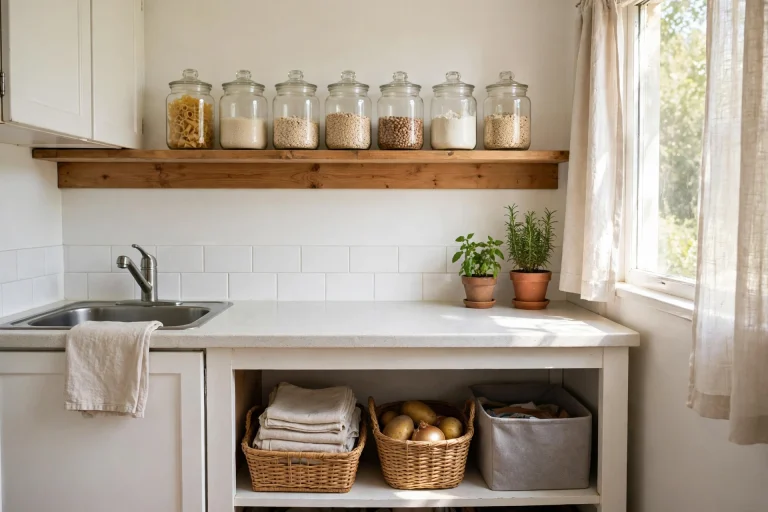
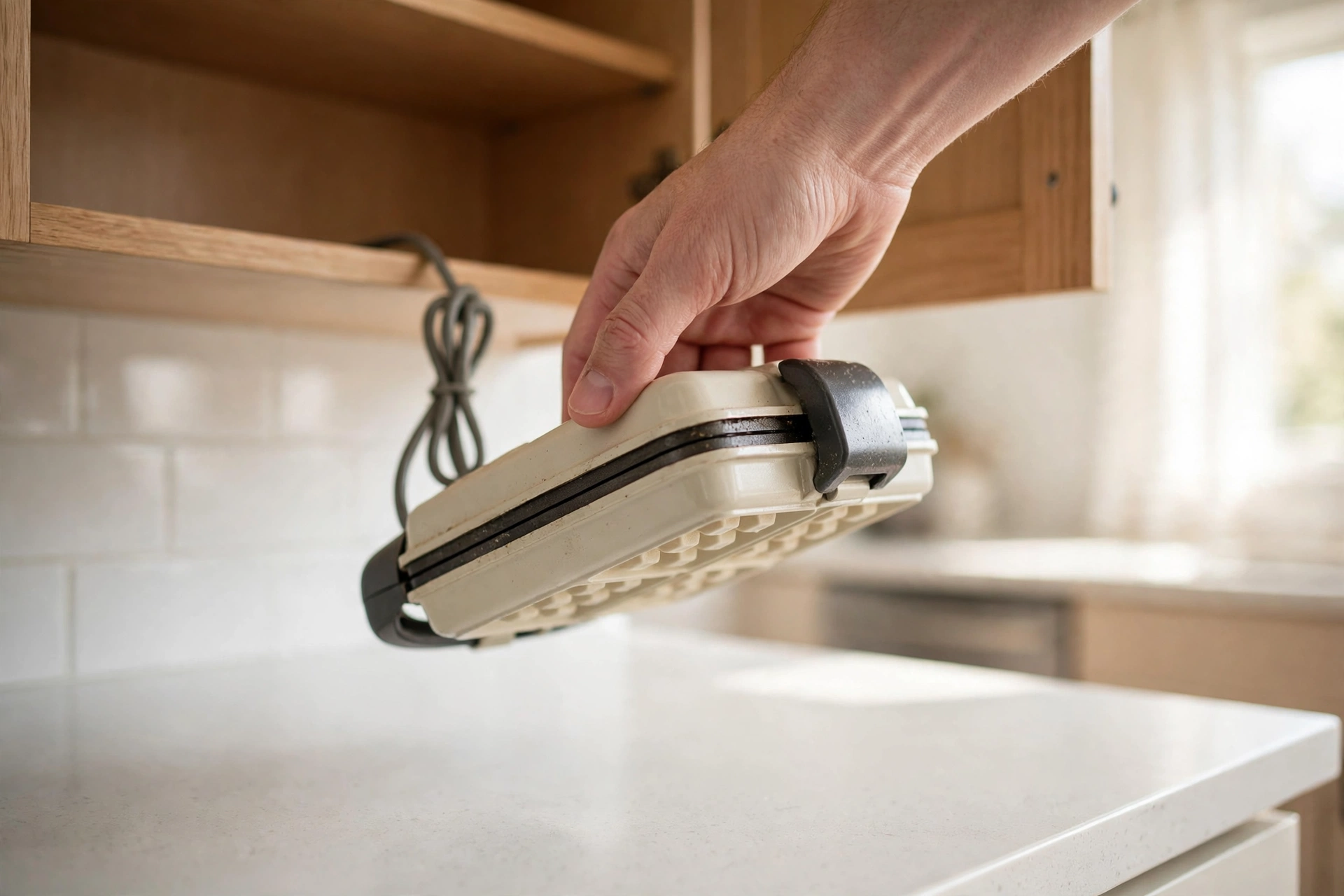
Rarely used appliances are the biggest counter thieves: the waffle maker, the bread machine, the juicer that comes out twice a year. Each one needs a home in a cabinet or on a pantry shelf, where it can be fetched when it is actually wanted. If there is no cabinet space for it, that is useful information — it may be an appliance you do not need to keep at all.
The same applies to the non-kitchen drift: mail, keys, school papers, charging cables. Those items do not belong in the kitchen in the first place, and a small tray or hook by the door solves the problem better than a permanent pile on the counter. For a kitchen that has to work hard in a small space, How to Organize a Small Apartment Kitchen in 7 Steps (Renter-Friendly) uses the same zone idea: everything lives where its task happens, and nothing lives on the counter by default.
Step 4: Keep one beautiful thing, not five
A completely bare counter can feel stark, and a single plant, fruit bowl, or vase makes the kitchen feel finished without costing prep space. The trick is the number: one. One beautiful thing is a finishing touch. Five are a display that needs dusting and works around.
Choose the one thing you actually enjoy seeing, put it where it will not be in the way of prep, and let everything else earn its place by use. If a decorative item starts collecting other items around it — keys on the tray, mail behind the plant — it has stopped being decoration and become a landing zone, and it needs to move.
Step 5: Run a two-minute nightly reset
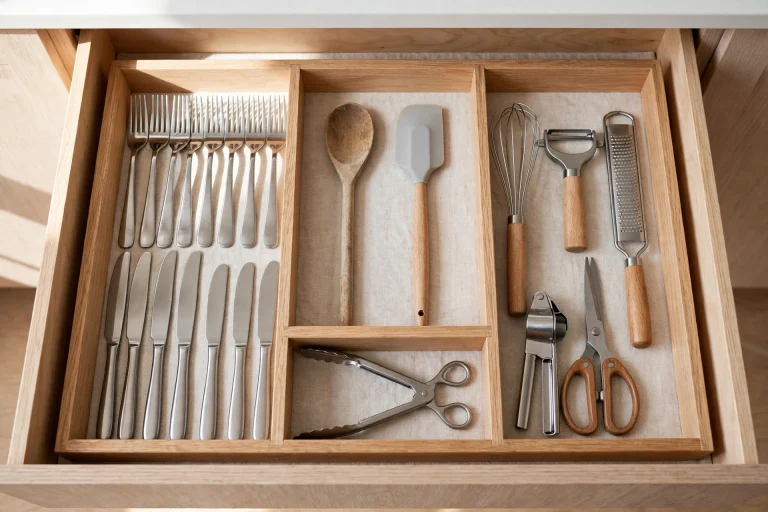
A clear counter only stays clear if putting things away is part of the routine. At the end of cooking, before the kitchen is closed for the night, spend two minutes returning everything to its zone: utensils to their crock, the board to its slot, the mail to its tray. This is the same small habit that keeps a whole kitchen organized — How to Keep a Kitchen Organized: A Weekly 15-Minute Reset Routine works because the reset is short enough to actually happen.
If something keeps ending up on the counter night after night, it does not have a good home yet. Fix the home, not the habit: move the item closer to where it is used, or admit it is a rarely item and store it properly. The counter will tell you, every evening, exactly where the system is weak.
Summary table
| Rule | What to do | Watch out for |
|---|---|---|
| Weekly test | Only weekly-or-more items earn a counter spot | “Might need it” is not weekly use |
| Empty first | Clear the whole counter, then sort by use | Tidying around the edges hides the rarely pile |
| Clear prep stretch | Keep at least a cutting-board width empty | A full counter with no prep space is still cluttered |
| Rarely gets a home | Cabinets or shelves for monthly appliances | No cabinet space may mean the item can go |
| One beautiful thing | One plant, bowl, or vase — not a display | Decoration that collects piles is a landing zone |
| Nightly reset | Two minutes returning items to their zones | A repeat offender needs a better home, not scolding |
Frequently asked questions
What should always stay on the kitchen counter?
Only what you use at least weekly, in the zone where you use it: typically a kettle or coffee maker, a cutting board, and cooking utensils by the stove. Everything else earns its place by frequency, not by habit.
How do I keep the counter clear with a small kitchen?
Be stricter, not looser: small kitchens have less counter to waste, so the weekly test matters more. Store rarely used appliances in a cabinet or pantry shelf, and protect one clear prep stretch above all else.
Where should rarely used appliances go?
In the nearest cabinet or pantry shelf where they can be fetched when wanted. If no such space exists, consider whether the appliance is worth keeping at all.
What about mail and keys on the counter?
Give them a home outside the kitchen — a tray or hooks by the door. The counter is a food-prep surface, and non-kitchen items are the fastest way to lose it.
How often should I declutter the countertop?
Do a two-minute reset nightly, and a full empty-and-sort a few times a year, or whenever the counter starts creeping full again. The nightly reset is what keeps the big clear-outs rare.
Shop This Guide’s List
Prefer to shop it all in one place? Every product in this guide is collected in our Benable list: What Earns Counter Space (and What Doesn’t): Daily Tools, One Clear Stretch & a Nightly Reset — tap any item to see it at the store.