Pantry Storage Hacks That Actually Work in a Small Kitchen
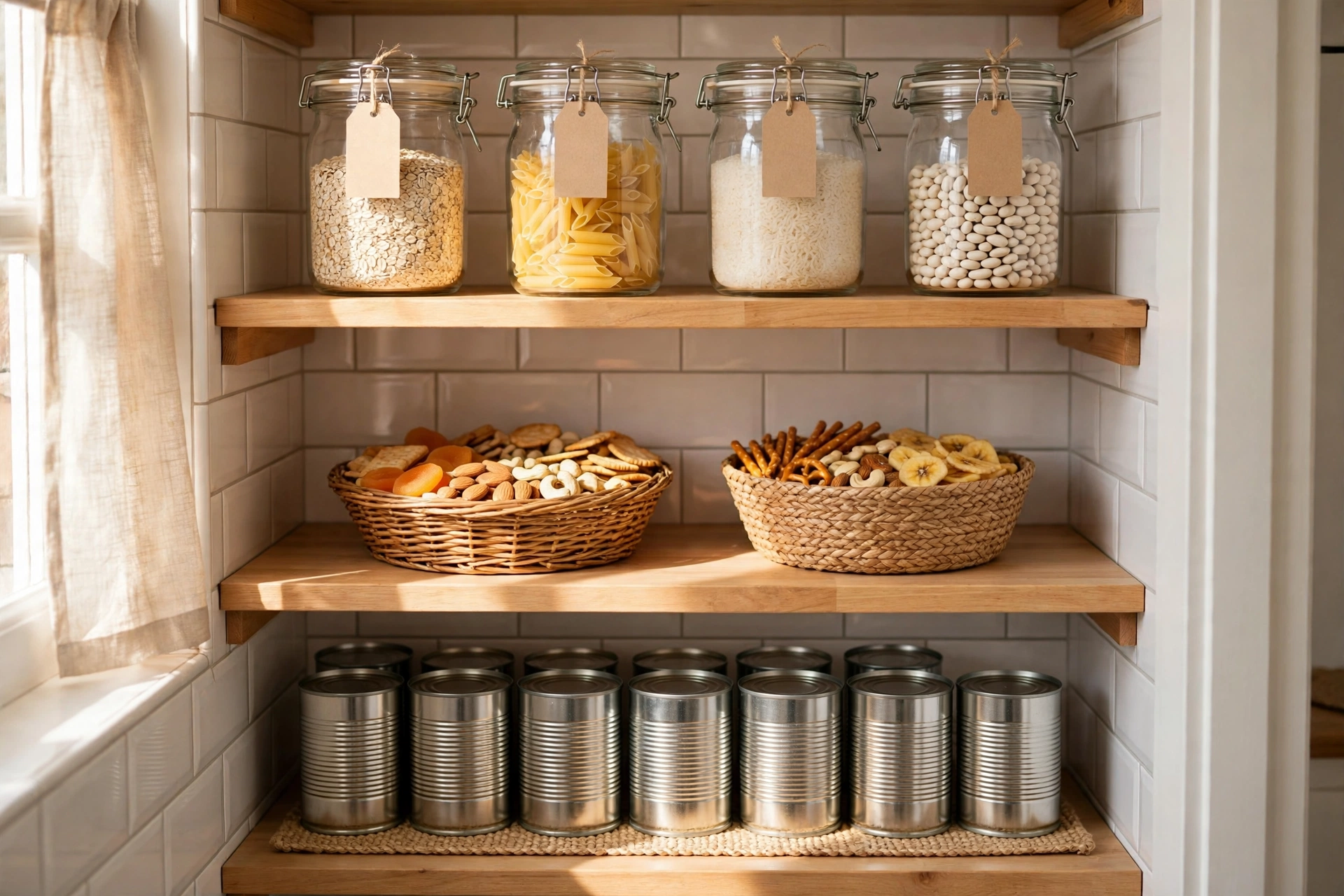
A small pantry does not fail because it is small. It fails because nothing in it can be seen: cans hide behind cans, half-empty bags fall over, and the same pasta gets bought twice because the first bag was buried. The hacks that actually work in a small kitchen all fix that one problem — visibility — and they cost almost nothing.
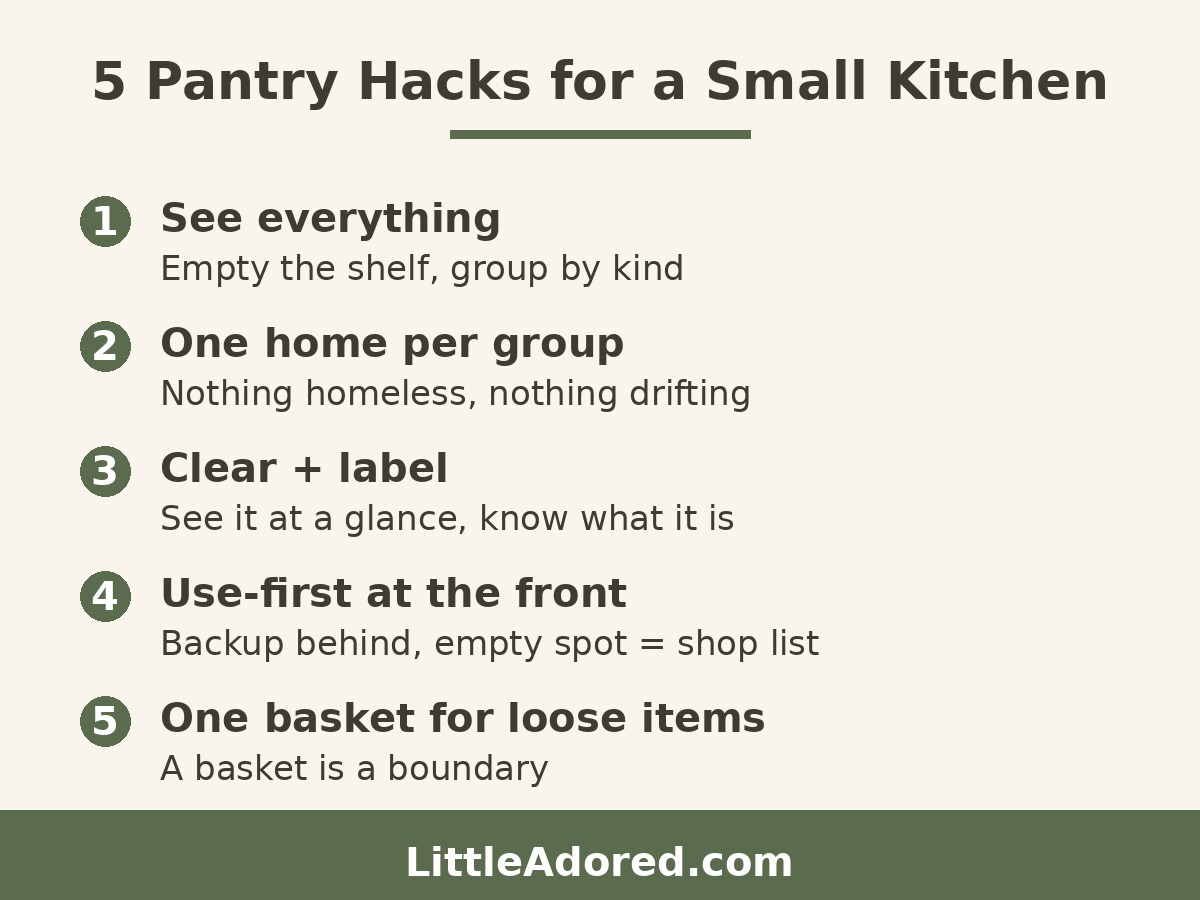
Start with the answer in one sentence: take everything out so you can see what you own, give each group one home, store it where you can see it, label it, and keep the use-first items at the front. Everything below is that sentence, unpacked.
Hack 1: See everything before you store anything
Take the whole shelf out — every can, bag, jar, and stray packet — and put it on the counter grouped by kind: breakfast, pasta and grains, cans, snacks, baking. You will find duplicates, expired items, and at least one thing you forgot you owned. That is the point: a pantry organized around what you think you own stays messy, while one organized around what you actually own stays honest.
This is the same clear-first rule as How to Declutter a Kitchen Before You Organize It — sorting first means every container and basket afterwards has a real job, not a guessed one.
Hack 2: One home per group, and nothing homeless
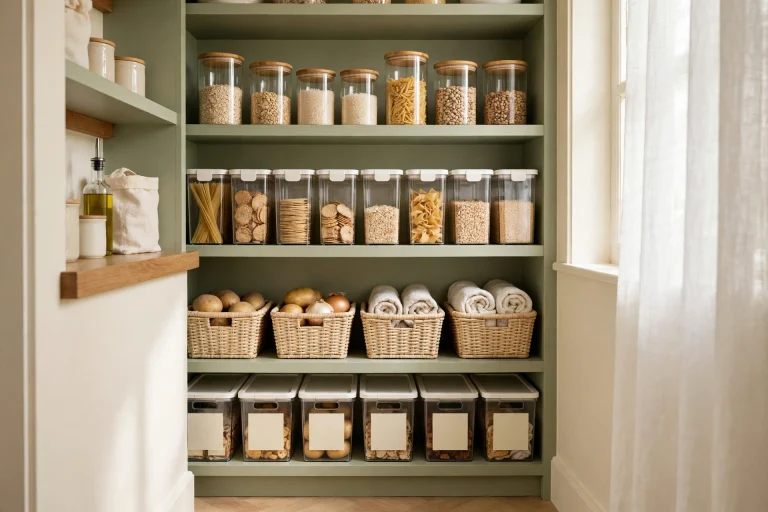
Give each group exactly one place: one shelf section for cans, one for pasta and grains, one basket for snacks, one spot for baking. When a group has no home, its items drift onto every shelf and the whole pantry reads as clutter again within a week. A single row of cans beats two rows every time, because the back row is where duplicates are born — the same single-row rule that keeps How to Organize a Small Pantry Step by Step working.
If a group is too big for its home, the group is too big, not the home too small. Split it (weekday snacks versus baking supplies), move the overflow to a second home with its own label, or let the least-used items go. A home that overflows is a home that stops working.
Hack 3: Clear containers and labels you can read at a glance
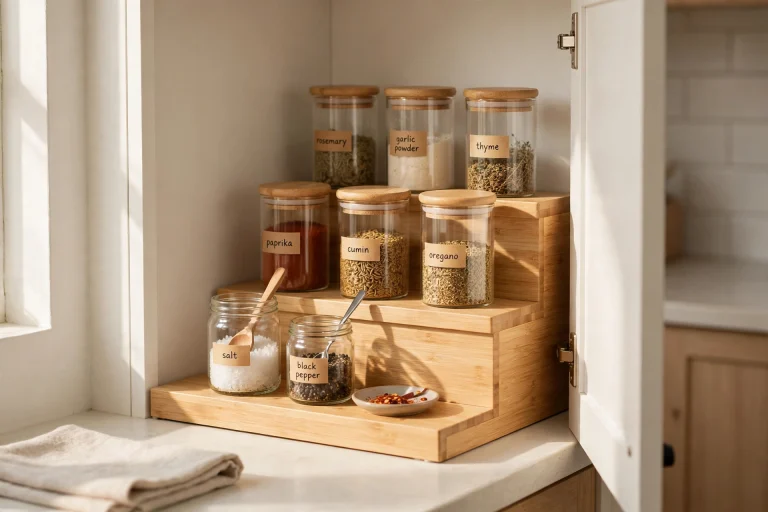
Decant the staples you use most — rice, pasta, oats, flour — into clear containers, and label each one with what it is. Clear matters more than matching: you should be able to see at a glance whether the rice is nearly out, without opening anything. Labels matter because clear containers of white powders all look alike, and guessing wrong mid-recipe is how a second bag gets opened.
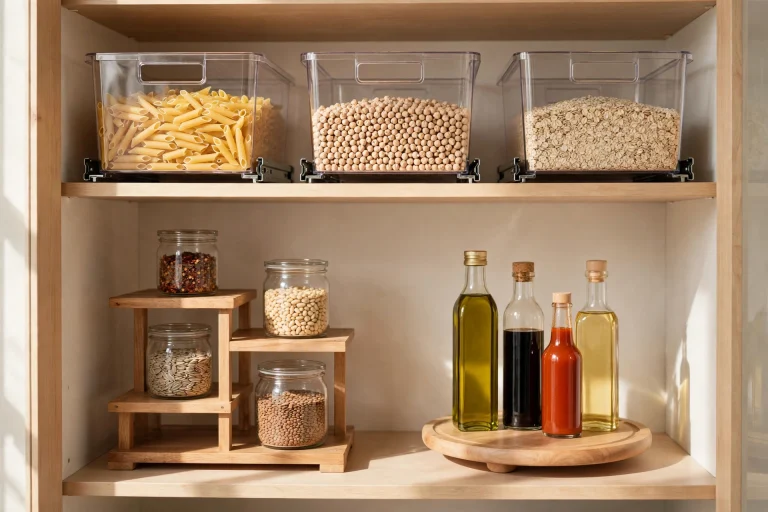
Keep the original cooking instructions if you need them: cut them out and tape them to the back of the container, or keep one small notebook for the pantry. For deep shelves, the same bring-the-back-forward logic in How to Organize Deep Pantry Shelves (Bins, Risers, Turntables) applies — a bin you can pull out beats a shelf you have to reach into.
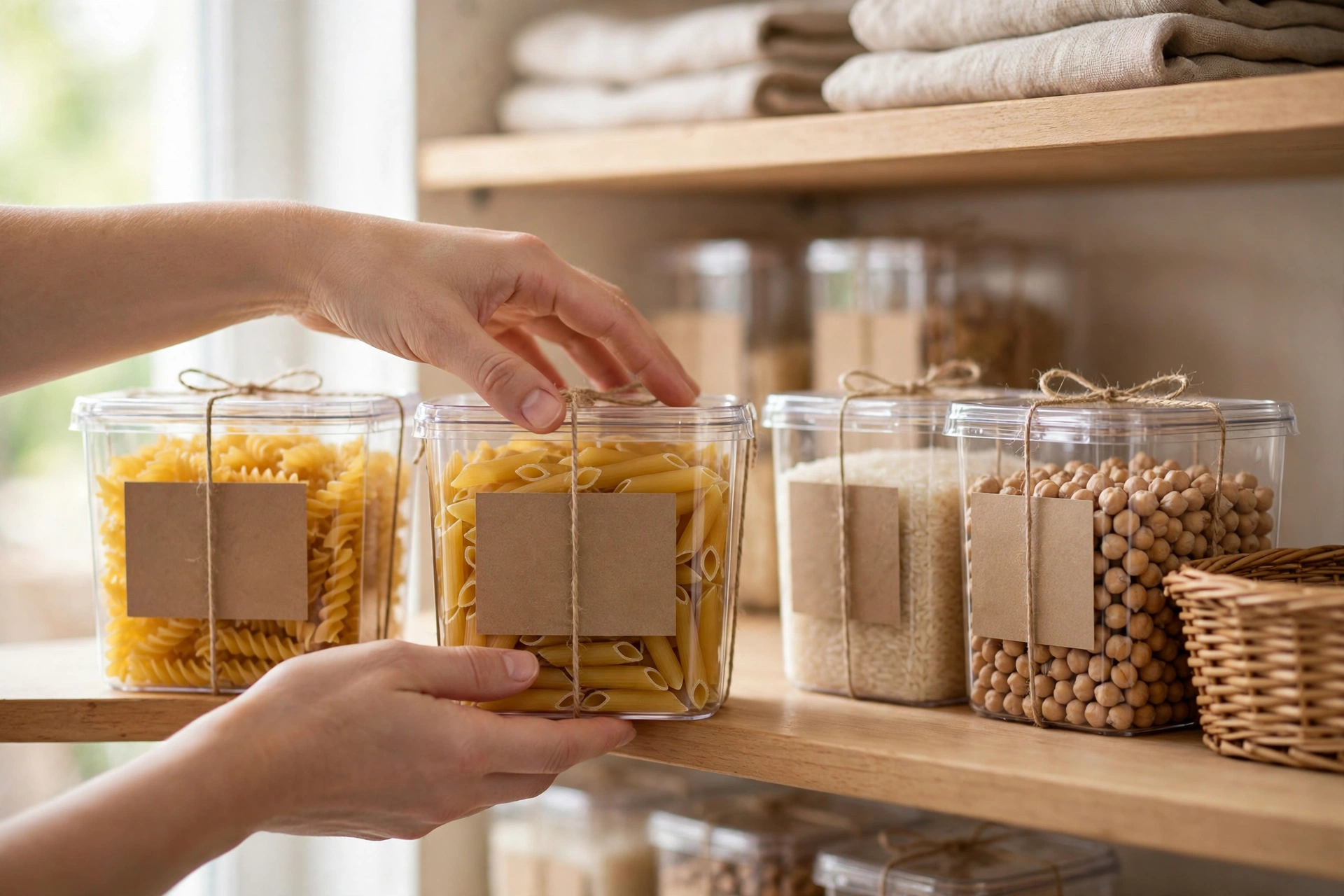
Hack 4: Use-first at the front, backup out of the way
Put the item you are using now at the front and its backup behind or above it, never the other way round. When the front item runs out, the backup slides forward and the empty spot tells you what to buy. This one habit stops most duplicate buying: you never buy a second jar while the first is still visible at the front.
The same logic works across the kitchen. How to Organize a Kitchen by Zones (Prep, Cooking, Cleaning, Storage) puts everyday items between waist and eye level for the same reason — the things you reach for daily should take the least effort to see and grab.
Hack 5: One basket for everything loose
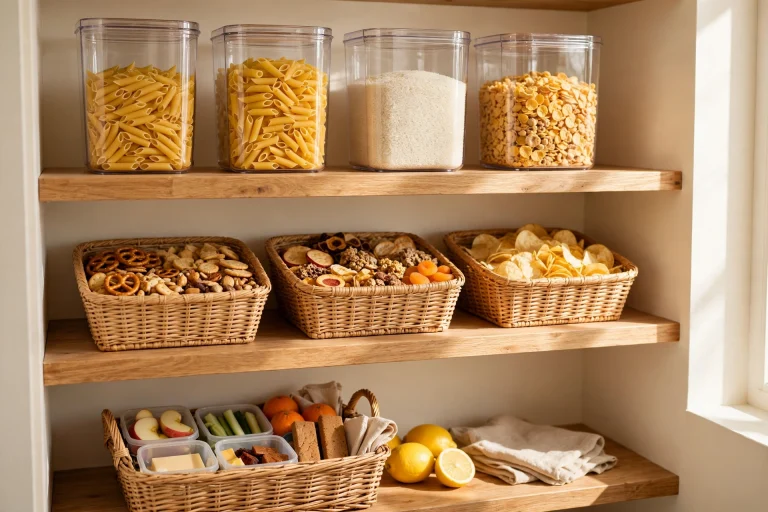
Loose items — snack packets, sauce sachets, small bags that will not stand up — are what make a tidy pantry look messy. Give them one basket per group and stop there: a snack basket, a baking-extras basket, nothing more. When the basket is full, something leaves before anything new goes in. A basket is a boundary, not just a container, and a boundary is what keeps a small pantry from quietly refilling.
What to skip
Skip the hacks that look good and work badly in a small kitchen: matching containers for things you rarely use (they eat shelf space and attention), stacking cans more than two high (the bottom one is forgotten), and buying organizers before sorting (they just give clutter a nicer shape). Organize what you own first, then buy only the container or basket that solves a gap you actually found.
A short weekly habit protects the work: when something new comes home, it goes straight to its group’s home, and anything that has lost its home gets one before the shopping is put away. How to Keep a Kitchen Organized: A Weekly 15-Minute Reset Routine is the routine that keeps a working pantry working.
Summary table
| Pantry hack | What it fixes |
|---|---|
| See everything first | Duplicates, expired items, forgotten food |
| One home per group | Items drifting onto every shelf |
| Clear containers + labels | Guessing what is inside, opening everything |
| Use-first at the front | Buying a second jar while one is still there |
| One basket for loose items | Packets and small bags making shelves look messy |
Frequently asked questions
What are the best pantry storage hacks for a small kitchen?
The ones that improve visibility: sort everything by group first, give each group one home, store staples in clear labelled containers, keep use-first items at the front, and corral loose packets in one basket per group.
How do you organize a small pantry without buying lots of containers?
Start with sorting and single-row storage, which cost nothing. Add containers only for the staples you use most and baskets only for loose groups — buy to fill a gap you found, not before sorting.
Should pantry containers be clear or opaque?
Clear, for staples: you can see at a glance what is running low without opening anything. Label them anyway, because white powders and grains look alike.
How do you stop buying duplicates in a small pantry?
Keep one row of each item visible at the front, with backups behind it. When the front item runs out, the empty spot is the shopping list — you never buy a second while the first is still visible.
How do you keep a small pantry organized long term?
Put every new item straight into its group’s home, and run a short weekly reset: return strays, pull use-first items forward, and let go of anything expired or unused.
Shop this guide’s list
Shop every pick from this guide in our Benable list: I Finally Found Pantry Storage Hacks That Actually Work in My Small Kitchen