How to Use Pull-Out Cabinet Organizers in a Small Kitchen
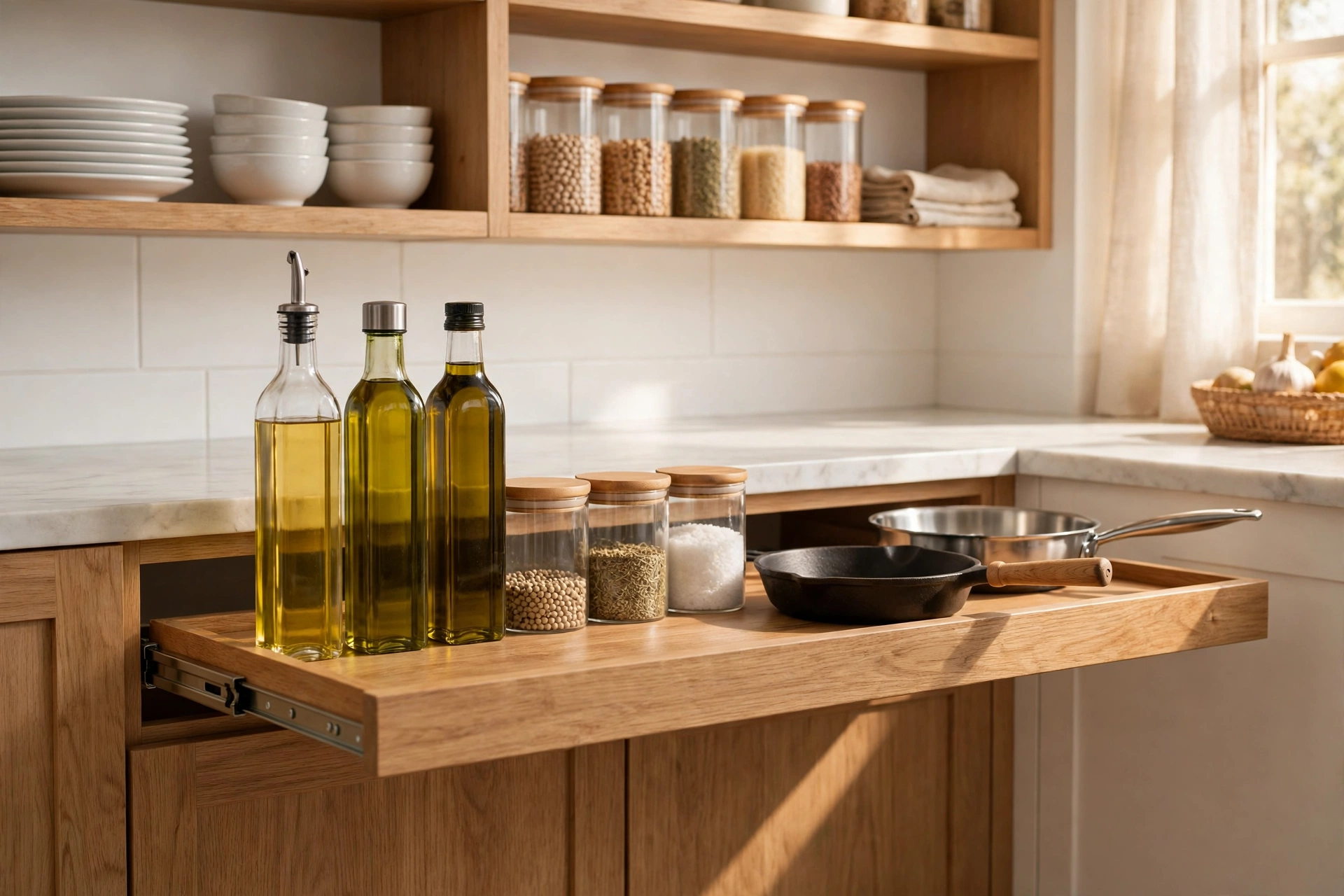
A deep kitchen cabinet in a small kitchen is a hiding place, not storage. Things go in at the front, slide to the back, and are forgotten until they expire or are bought twice. A pull-out organizer changes that one fact: instead of reaching into the cabinet, you pull the shelf out and the back of the cabinet comes to you.
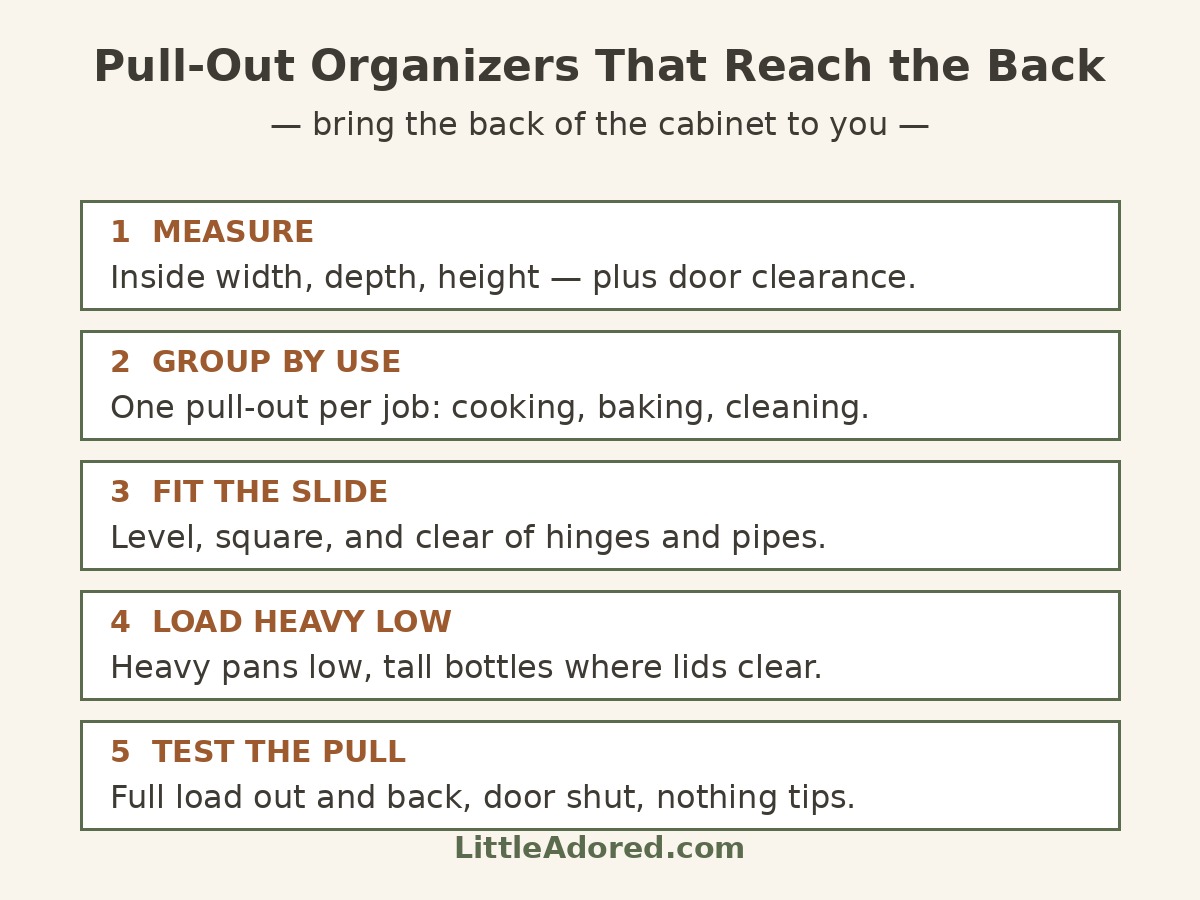
Start with the answer in one sentence: measure the inside of the cabinet, group what lives there by use, fit the pull-out level and clear of hinges and pipes, load heavy items low, and test the full pull with the real load before calling it done. Everything below is that sentence, unpacked.
Step 1: Measure the inside, and the door
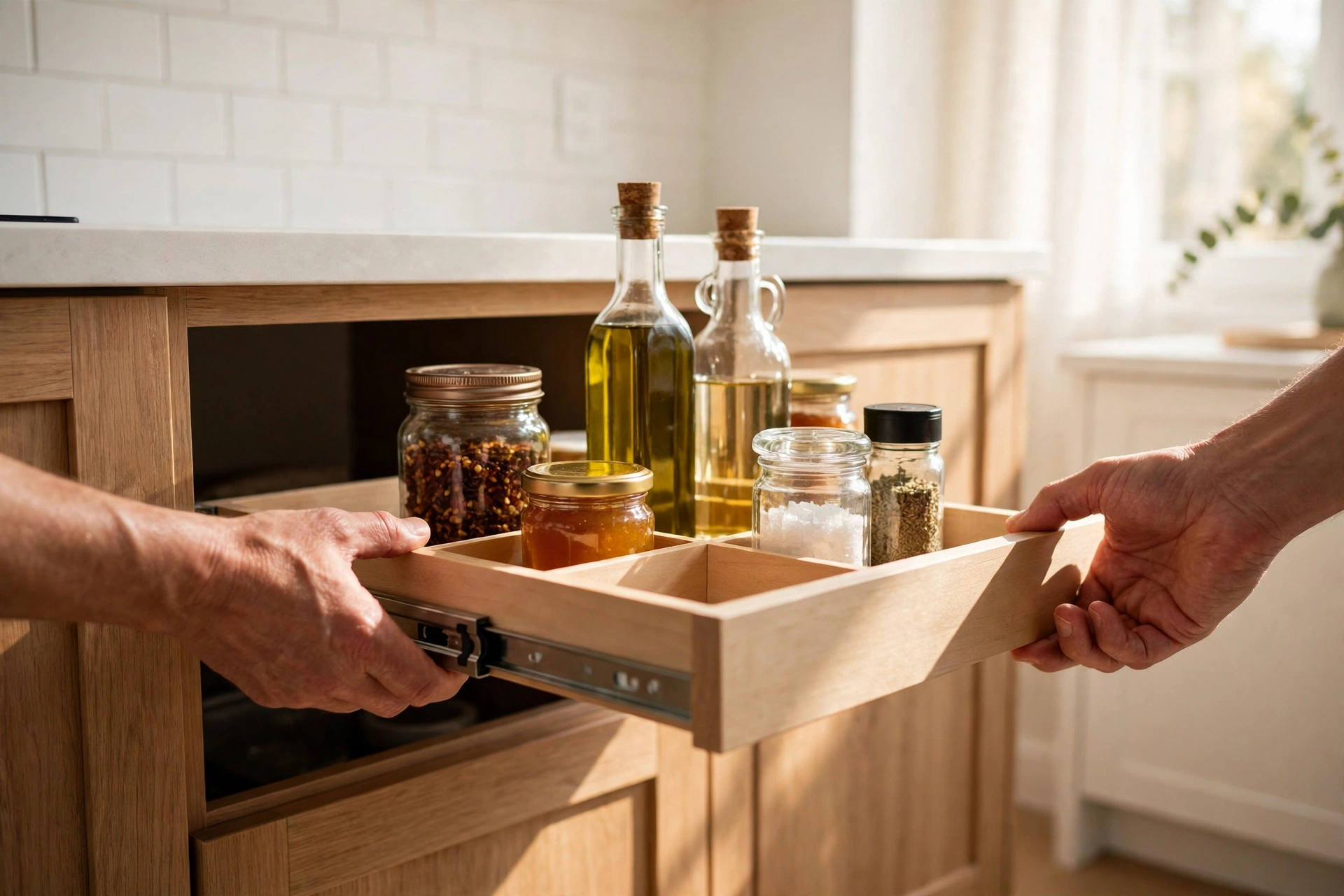
Measure the cabinet’s inside width, depth, and height, in at least two places — cabinets are rarely perfectly square, and a shelf sized to the front can bind at the back. Measure the door opening too, and check what the door itself clears: hinges, a frame lip, or a neighbouring drawer can all steal the centimetres a pull-out needs to slide.
Note the tallest item the pull-out must hold with the cabinet door closed, and the depth of the cabinet minus the slide mechanism. A pull-out that is too tall will catch on the shelf above; one that is too deep will not close. This is the same inside-not-front rule as How to Organize Kitchen Cabinets So You Can Actually Reach Things — reach zones only work when the measurements are real.
Step 2: Empty the cabinet and group by use
Take everything out and sort it by the job it does: everyday cooking, baking, cleaning, or the odds and ends that do not belong in this cabinet at all. One pull-out per job keeps the system readable: a cooking pull-out with oils and sauces, a baking pull-out with flours and trays, not one long shelf holding a bit of everything.
Be honest at this step, the same way How to Declutter a Kitchen Before You Organize It advises: broken, duplicated, or unused-for-a-year items leave before any organizer is fitted. A pull-out full of things you never use is just a tidy way of keeping clutter, and it wastes the one thing a small kitchen cannot spare — a working shelf.
Step 3: Fit the slide level and clear
Fit the pull-out level and square, with its slide clear of hinges, pipes, and the cabinet frame. A slide that is even slightly out of level will drift, stick, or pull the shelf sideways every time it moves. Check the full travel empty first: the shelf should slide all the way out without catching, and all the way back in without pushing against the door.
If the cabinet is under the sink, check the pipes before anything else. How to Organize Under the Kitchen Sink Around Pipes covers working around that awkward space — a pull-out that fouls a pipe is worse than no pull-out at all, because it blocks access to both.
Step 4: Load heavy low, tall where lids clear
Load the pull-out the way it will actually be used. Heavy items — pans, large jars, appliances — go low and near the slide, where their weight stays stable. Tall bottles go where their lids clear the shelf above, not where they look neat in a photo and then catch every time the shelf slides.
Keep the front of each pull-out for the items reached for daily, and the back for the ones used weekly. That sounds backwards — the back is now easy to reach — but it keeps the daily grab to one motion, and the weekly items still only need one pull to reach. Leave a little breathing room on each shelf; a shelf packed edge to edge is as hard to use as a cabinet with no pull-out at all.
Step 5: Test the pull with the real load
Put the real items back, then pull the shelf fully out and push it fully back several times, and close the cabinet door. This is the step that saves a rebuild: a shelf that looks right empty often turns out too narrow for the pan, too shallow for the bottles to stand upright, or too heavy on one side to slide smoothly.
Check three things in the test: every item lifts out without catching, the door closes fully without anything pressing on it, and nothing tips or slides when the shelf is pulled firmly. If a small item keeps migrating, that section needs a divider or a small bin inside the pull-out, not a taller wall around it.
What pull-outs pair well with
Pull-outs fix the inside of a cabinet; the rest of the kitchen still needs its own homes. For deep shelves without a pull-out, How to Organize Deep Pantry Shelves (Bins, Risers, Turntables) covers bins and turntables that bring the back forward in a different way. And for drawers that hold tools rather than food, How to Make DIY Drawer Dividers That Keep Kitchen Drawers Organized covers sizing dividers to the drawer itself.
A short weekly habit protects the work: when a pull-out starts drifting, it is usually one shelf that has taken in strays. Empty that shelf, return the strays to their real homes, and the pull-out layout does the rest. How to Keep a Kitchen Organized: A Weekly 15-Minute Reset Routine is the routine that keeps a working cabinet working.
Summary table
| Pull-out move | What it fixes |
|---|---|
| Measure inside + door | Shelves that bind, catch, or will not close |
| Group by use | One shelf holding a bit of everything |
| Fit slide level and clear | Slides that drift, stick, or foul hinges/pipes |
| Load heavy low | Shelves that tip or slide unevenly |
| Test with the real load | Sections too narrow, shallow, or heavy to use |
Frequently asked questions
Q: How do pull-out cabinet organizers work in a small kitchen?
A: A shelf on a slide replaces reaching into a deep cabinet: pull it out and the back of the cabinet comes to you, so nothing is forgotten at the back or bought twice.
Q: How do you measure a cabinet for a pull-out organizer?
A: Measure the inside width, depth, and height in at least two places, plus the door opening and hinge/frame clearance, and note the tallest item that must fit with the door closed.
Q: What should go on a pull-out shelf?
A: One job per pull-out — cooking, baking, or cleaning — with heavy items low, tall bottles where lids clear, and daily items at the front for a one-motion grab.
Q: Do pull-out organizers work under the sink?
A: Only if the slide clears the pipes. Check the pipe layout first and keep the pull-out clear of it, or the organizer blocks access to both the shelf and the plumbing.
Q: How do you keep pull-out shelves organized?
A: Give each pull-out one job, and when a new item arrives, let it replace something rather than earning a new section. A short weekly pass returns strays to their real homes.
Shop this guide’s list
Shop the pull-out organizers, tools, and bins from this guide in our Benable list: https://benable.com/LittleAdored/i-finally-found-pull-out-cabinet-organizers-that-bring-the-back-of-my-cabinets-to-me