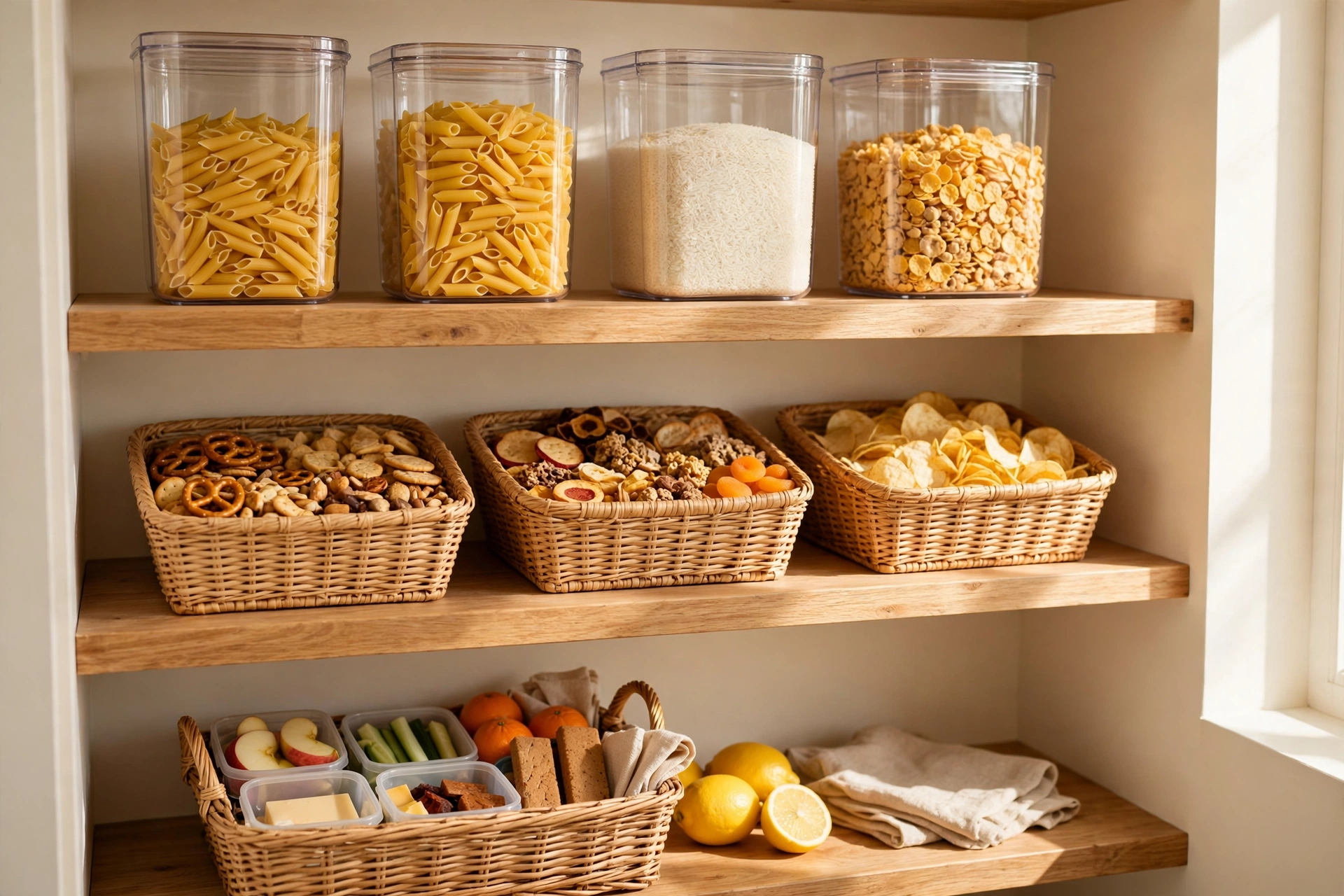
How to Organize a Kitchen Pantry for a Large Family
A family pantry fails in a specific way: it is not too small, it is too mixed. Five kinds of pasta behind three kinds of cereal, snack bags scattered across three shelves, and lunchbox supplies hiding behind backup stock nobody reaches until it expires. The fix is not a bigger pantry. It is giving each kind of food exactly one home, sized for how fast a family actually eats it, and keeping the daily food separate from the backup food.
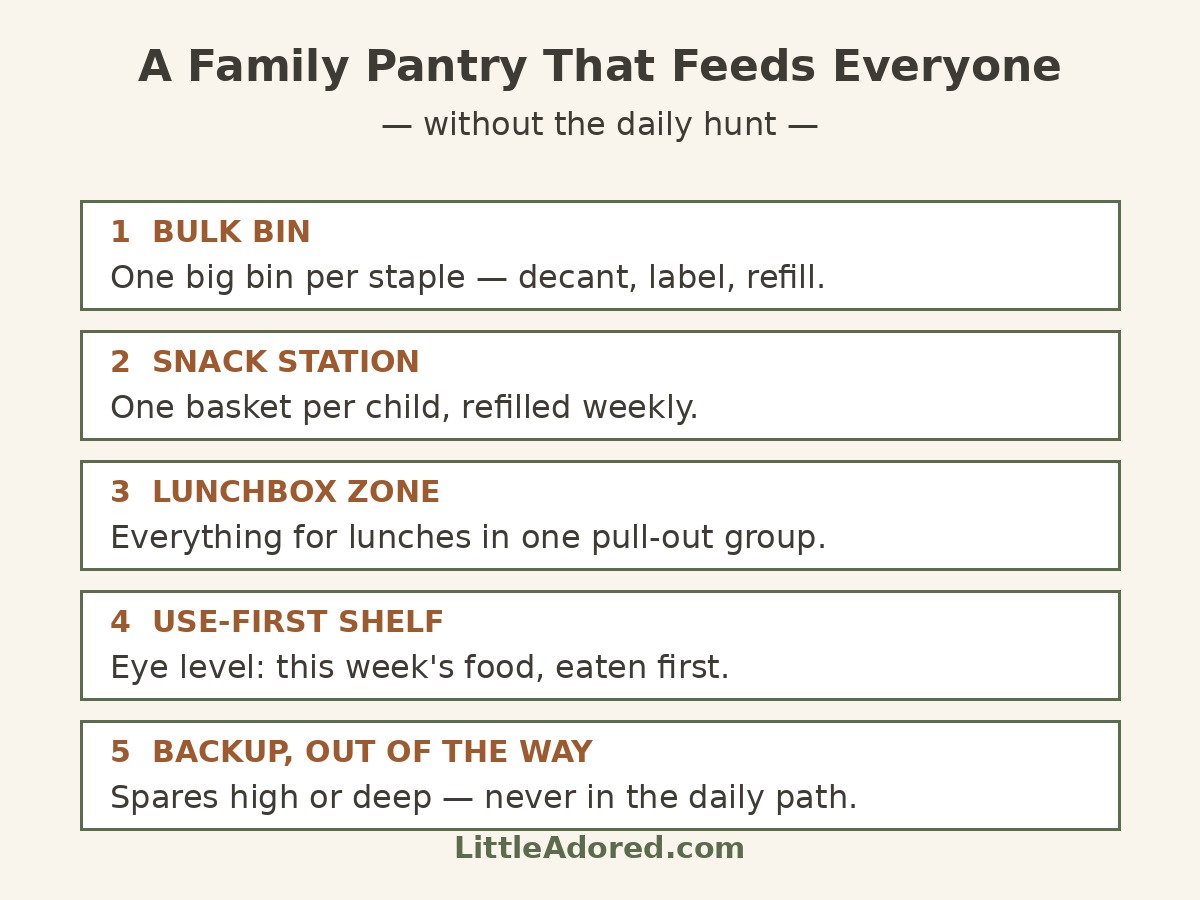
Start with the answer in one sentence: when you organize a pantry for a large family, staples live in big bins, snacks live in per-child baskets, lunchbox supplies live together, this week’s food sits at eye level, and backup stock lives out of the daily path. Everything below is that sentence, unpacked.
Step 1: Empty it, then sort by how the food is used
Take everything out, shelf by shelf, and sort into five piles: everyday staples (pasta, rice, oats, cereal), snacks, lunchbox supplies, baking and cooking ingredients, and backup stock. Throw out anything stale or past its best, and combine duplicates — three half-open bags of the same pasta become one full container.
This is the pantry version of the declutter-first rule in How to Declutter a Kitchen Before You Organize It: shrink the stock before giving it homes. A family pantry usually loses a whole shelf at this step, and that shelf is the space the new system runs on.
Step 2: One big bin per staple — decant, label, refill
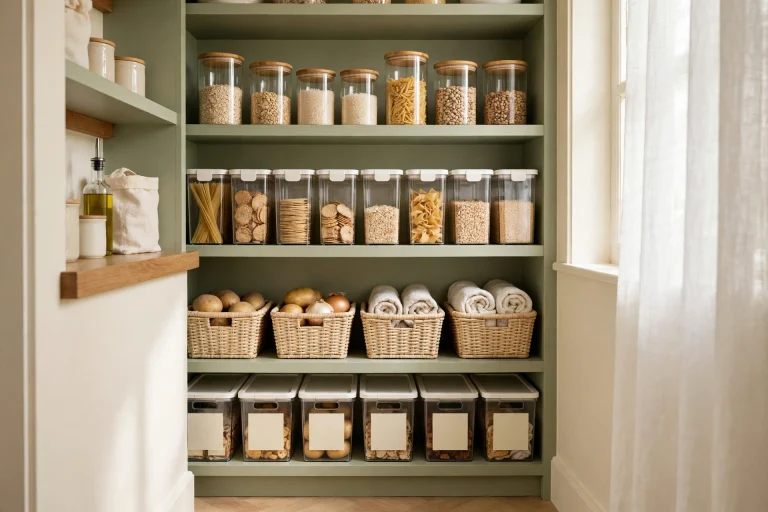
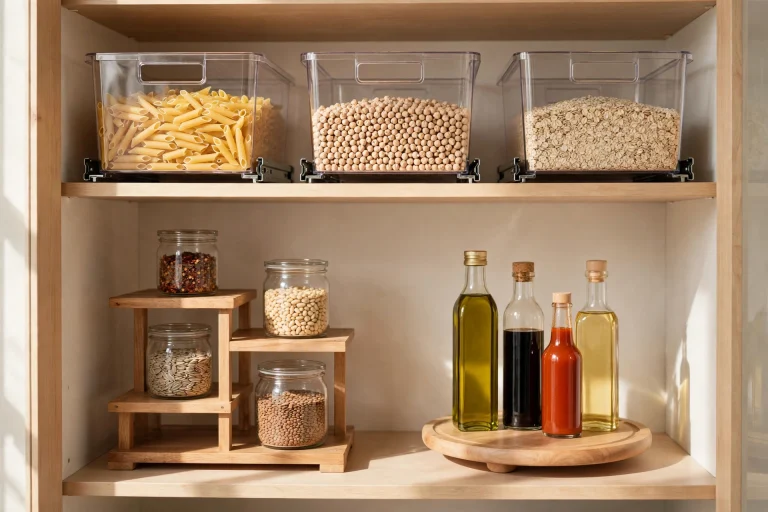
Staples are the food a family eats fastest, so they deserve the biggest containers. One bin per staple: pasta, rice, oats, flour, sugar, cereal. Clear bins show at a glance what is running low, which stops the classic large-family waste — buying a third bag of rice because the first two were hidden behind boxes.
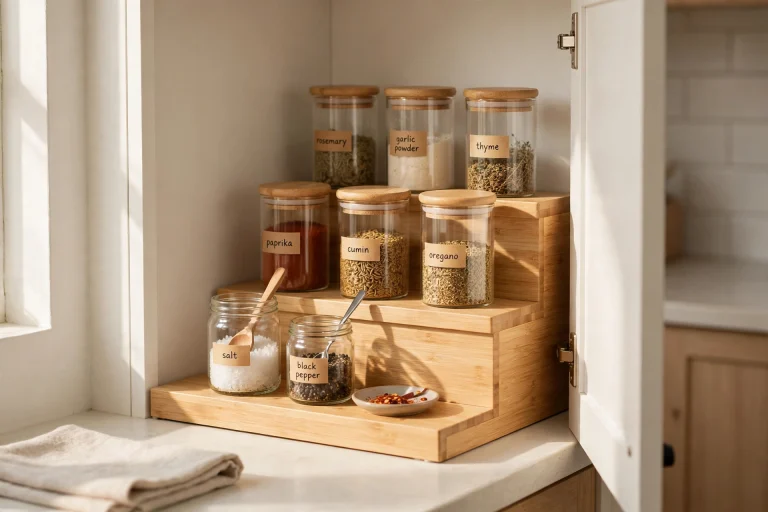
Decant only the staples that turn over weekly; a bin for something eaten twice a year is decoration. Label every bin in plain words, and put a refill rule on it: when a bin drops below a quarter full, it goes on the shopping list that day, not at the next big shop. How to Organize Deep Pantry Shelves (Bins, Risers, Turntables) covers the same bin logic for deep shelves, where the front row must never hide the back.
Step 3: A snack station — one basket per child
Snacks are where family pantries dissolve into chaos, because every person grabs from a different shelf. Give snacks one station, and within it, one basket per child — or one basket per snack type if baskets per child do not suit the household. The rule that makes it work: the basket is refilled once a week, and when it is empty, it stays empty until refill day.
That single rule ends the two daily arguments: “there’s nothing to eat” (there is — it is in the basket, or it is refill day tomorrow) and the scavenger hunt through every shelf. Keep the station at a height every child can reach safely, and keep it away from the cooking staples so snack-grabbing never disturbs dinner prep. For the small-pantry version of the same discipline, How to Organize a Small Pantry Step by Step groups by use before anything is bought or decanted.
Step 4: A lunchbox zone — everything in one pull-out group
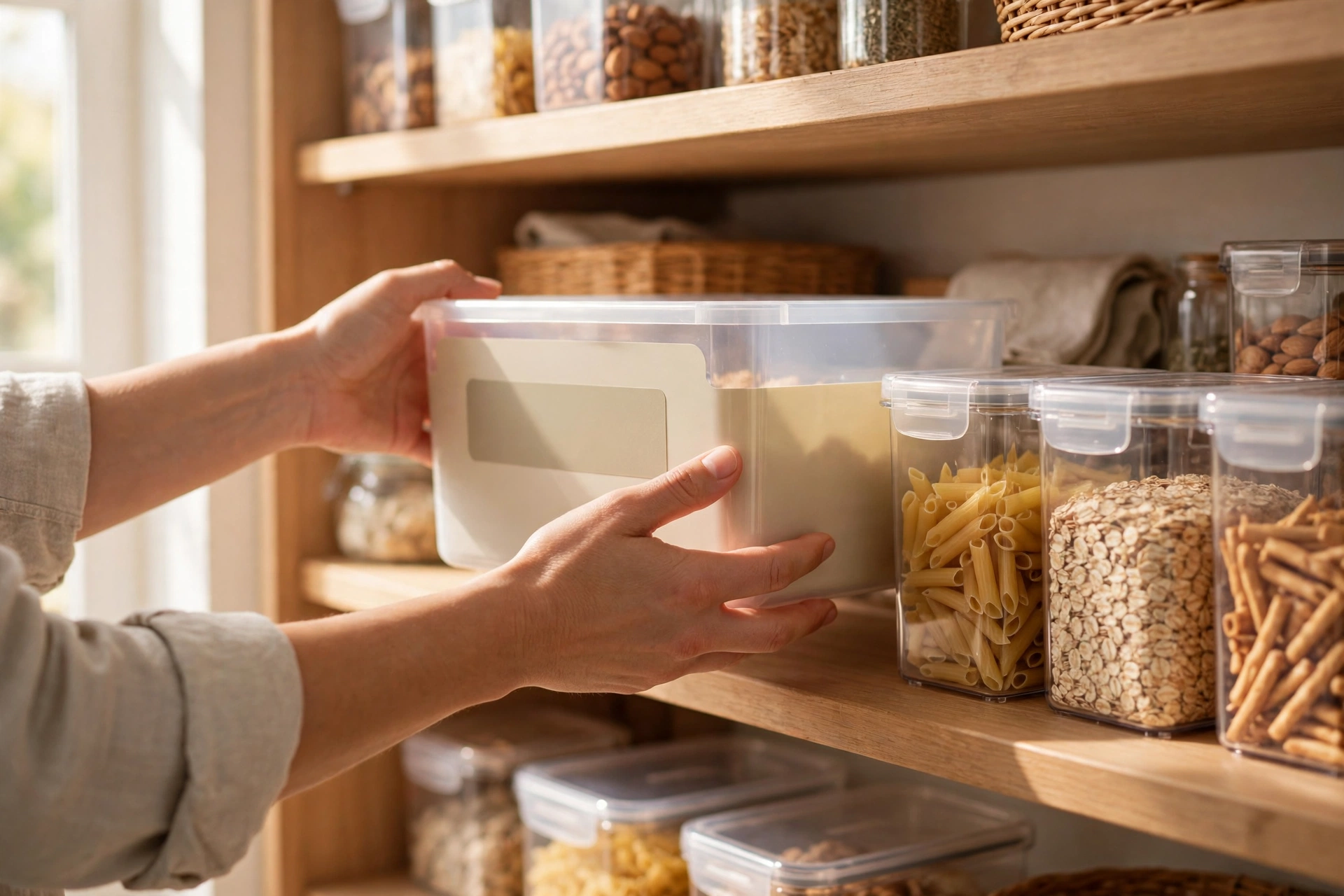
Lunchboxes are a daily assembly job, so their supplies should live as one group: boxes, lids, snack pouches, drink bottles, and the small containers, all in one basket or on one shelf section that pulls out as a unit. Packing lunch then takes the group out, fills it, and puts it back — instead of opening five cupboards before school.
Keep lids with their boxes, not in a separate pile; the lid hunt is the part of lunch packing that eats the most time. How to Organize Food Storage Containers and Lids sets out the matching rule in full. If the lunchbox zone keeps drifting apart, it is too big — shrink it to what one week of lunches actually needs.
Step 5: The use-first shelf at eye level
Put this week’s food at eye level: the opened pasta, the cereal in use, the snacks for these few days, the ingredients for this week’s planned meals. Everything behind or below it is backup. The use-first shelf is the one rule that stops food expiring at the back of a deep pantry: what is eaten this week is always in front, and what is opened first is finished first.
When the weekly shop arrives, new stock goes behind the use-first items, never in front of them — the same rotation rule shops use, applied to a family shelf. If a use-first item is still there next week, it was not this week’s food; move it to backup and stop buying it weekly.
Step 6: Backup stock high, deep, or elsewhere — never in the daily path
Bulk buys and spares are the point of a large-family pantry, but they must not live where daily cooking happens. Backup stock goes on the highest shelf, the deepest part of a deep shelf, or a secondary spot outside the kitchen if one exists. The test: a person cooking dinner should never have to move a backup bag to reach tonight’s pasta.
Label backup stock with the month it was bought, and check it once a month — two minutes, one shelf, anything past its best leaves. Without that check, backup quietly becomes the clutter the whole system was built to prevent. How to Organize a Kitchen by Zones (Prep, Cooking, Cleaning, Storage) makes the same point for the whole kitchen: one job per zone, and backup is not a daily zone.
Step 7: Keep it running with a weekly reset
A family pantry needs a short weekly pass, or it slides back in a fortnight: put back what drifted, refill the snack baskets, rotate the use-first shelf, and take one thing out that nobody ate. Fifteen minutes, once a week, on the same day as the main shop works best.
How to Keep a Kitchen Organized: A Weekly 15-Minute Reset Routine is the habit that protects this system. If the reset keeps finding the same drifting item, its home is wrong — move it closer to where it is used, rather than adding another basket to hold it in the wrong place.
Summary table
| Family-pantry move | What it fixes |
|---|---|
| Sort by use, declutter first | A whole shelf of duplicates and stale stock |
| One big bin per staple | Hidden stock and duplicate buying |
| One snack basket per child, refilled weekly | Snack hunts and daily “nothing to eat” arguments |
| One lunchbox zone, lids with boxes | Five-cupboard lunch packing |
| Use-first shelf at eye level | Food expiring at the back |
| Backup high, deep, or elsewhere | Daily cooking blocked by bulk stock |
| Weekly 15-minute reset | Drift back into chaos within a fortnight |
Frequently asked questions
How do you organize a pantry for a large family?
Give each kind of food one home sized for how fast it is eaten: big bins for staples, one snack basket per child, one lunchbox group, a use-first shelf at eye level, and backup stock out of the daily path.
How do you stop buying duplicates for a big family?
Use clear staple bins and a refill rule: when a bin drops below a quarter full, it goes on the list that day. Clear bins show what is low; hidden bags cause duplicate buying.
Where should snacks go in a family pantry?
In one station at a reachable height, one basket per child, refilled once a week. When a basket is empty, it stays empty until refill day — that rule ends the daily snack hunt.
How do you keep bulk buys from taking over the pantry?
Keep backup stock high, deep, or outside the daily path, labelled with the month bought, and checked monthly. Daily cooking should never require moving a backup bag.
What is the best way to maintain a family pantry?
A weekly 15-minute reset on shopping day: put back what drifted, refill snack baskets, rotate the use-first shelf, and remove one uneaten item.
Shop This Guide’s List
Prefer to shop it all in one place? Every product in this guide is collected in our Benable list: I Finally Found the Pantry System That Feeds a Big Family Without Daily Chaos — tap any item to see it at the store.