
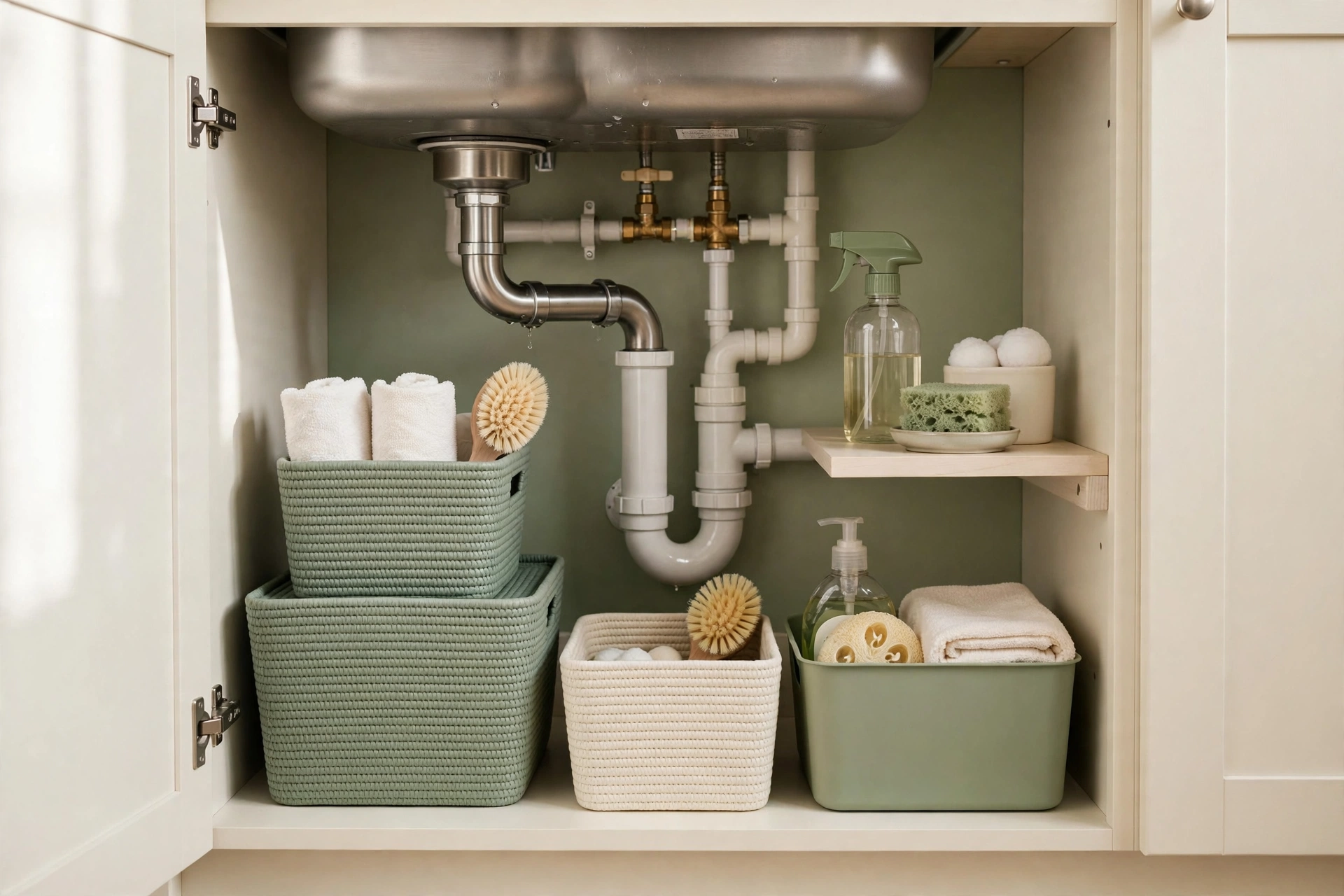
How to Organize Under the Kitchen Sink Around Pipes
To organize under the kitchen sink around pipes, measure the space around the plumbing first, then use stackable bins, a small tension rod, and hooks to work around the pipes instead of fighting them. Keep only cleaning essentials here: dish soap, sponges, trash bags, and dishwasher supplies. Give everything a bin or a hook, so nothing gets lost behind the pipes.
The cabinet under the sink is the most awkward storage in the kitchen: dark, damp, and chopped up by pipes and the garbage disposal. But it is also prime real estate, steps from the sink and dishwasher. This guide shows you how to make every inch usable. For the bigger picture, see our guide on how to organize a kitchen by zones, and if your whole kitchen is tight, our guide on how to organize a small kitchen without adding cabinets. Once this cabinet is sorted, the rest of your kitchen cleanup routine gets noticeably faster, because everything you need is exactly where you reach for it.
Before You Buy Anything: Empty and Measure
Pull everything out. Toss leaky bottles, rusted cans, crusty old sponges, and mystery cleaners you cannot identify. Wipe the cabinet floor and check for leaks or water damage. Fix drips before you organize anything. Then measure: the height, width, and depth around the pipes and disposal. Save the numbers on your phone; you will need them when choosing bins.
- Leaky or half-empty bottles
- Rusted steel wool and crusty sponges
- Expired or duplicate cleaners
- Anything you cannot identify
Step 1: Protect the Cabinet Floor
Line the bottom with a waterproof mat or a cut-to-fit shelf liner. Under-sink leaks happen. A mat turns a disaster into a wipe-up. This is the single most important step, and it costs almost nothing. Look for a mat with a raised lip, which contains small spills instead of letting them run to the edges. If your cabinet floor is already stained or warped from past leaks, a mat also hides the damage and gives you a clean surface to build on.
Step 2: Work Around the Pipes, Not Against Them
The pipes divide the cabinet into zones. Stop trying to fit one big organizer around them and use the layout instead:
- Stackable bins on either side of the pipes for bottles, boxes, and pods.
- A small tension rod wedged across the cabinet to hang spray bottles by their triggers. This uses the empty air above the pipes.
- Adhesive hooks on the inside of the cabinet doors for brushes, gloves, and trash bags.
- A narrow pull-out caddy in the center, if the pipes allow it.
| Spot | Use | What goes there |
|---|---|---|
| Left of the pipes | Tall bottles | Dish soap refills, all-purpose cleaner |
| Right of the pipes | Stacked bins | Sponges, dishwasher pods, scrub brushes |
| Door backs | Hooks | Gloves, small brush, trash bags |
| Low center | Drip tray | Rarely used items, backup supplies |
Step 3: Keep Only What You Use Weekly
Under the sink is not a warehouse. Keep only what you reach for every week: dish soap, a sponge or two, dishwasher pods, trash bags, and one all-purpose spray. Move bulk refills and specialty cleaners to the laundry room or garage. If the jumbo dish soap jug does not fit, decant it into a small pump bottle. Fewer, smaller items are easier to reach around pipes.
Step 4: Group by Task
Mini zones make the cabinet self-explanatory. One small bin per task, labeled:
- Dishwashing: dish soap, sponge, brush, drying mat
- Dishwasher: pods, rinse aid
- Waste: trash bags, recycling bags
- Occasional: drain cleaner, rubber gloves
When it is time to wash dishes, you grab one bin instead of digging.
Step 5: Light It Up and Label It
Under-sink cabinets are dark, and dark cabinets become black holes. A stick-on, motion-sensor LED light costs little and makes a dramatic difference: open the door and you can actually see what you have. Stick it to the cabinet ceiling or a side wall where the pipes will not block it.
Then label everything. A strip of painter’s tape and a marker on each bin, such as Dishwasher, Trash Bags, or Cleaning, means anyone in the household can find things and put them back. Labels are the cheapest organizer you own, and they are what keep the system working after the initial enthusiasm fades.
Under-Sink Summary Map (At a Glance)
Tape this map inside the cabinet door while you set up:
| Problem | Fix |
|---|---|
| Pipes block the middle | Tension rod above the pipes for spray bottles |
| Dark cabinet | Stick-on motion light or light-colored bins |
| Leaks ruin everything | Waterproof mat on the floor |
| Bottles tip over | Bins and caddies corral them |
| Cannot find small items | One labeled bin per task |
| Damp smell | Ventilate; never store food here |
The Monthly Two-Minute Check
Once a month, pull the bins out, wipe the mat, check for leaks, and toss empties. Under-sink cabinets hide slow leaks. This quick check catches them before they become damage. While you are there, wipe any sticky bottle bottoms.
Twice a year, do a deeper pass: pull everything out, wipe the mat with disinfectant, check the pipes and supply lines for moisture, and re-evaluate what lives here. If a product has sat untouched for six months, it does not earn this prime spot. Move it to the laundry room and free the space for something you actually use.
Frequently Asked Questions
How do I organize under the kitchen sink with a garbage disposal?
Treat the disposal as a wall and organize around it. Use the space on either side for bins, hang spray bottles from a tension rod above it, and keep the area directly beneath it clear for the waterproof mat.
What should not go under the kitchen sink?
Food and pet food: it is damp down there and close to chemicals. Keep harsh chemicals locked away from kids and pets with a childproof latch. This cabinet is for cleaning essentials only. Pantry goods belong in your pantry. Our guide on how to organize a small pantry step by step shows where.
How do I keep the area under my sink from smelling?
Fix leaks first: smell means moisture. Then do not overpack, wipe spills quickly, and toss old sponges regularly. A small open box of baking soda absorbs lingering odors.
Can I use a tension rod under the sink?
Yes. A small spring tension rod wedged between the cabinet walls is perfect for hanging spray bottles by their triggers. Measure your cabinet’s width first so the rod fits around your pipes.
How do I maximize vertical space under the sink?
Think in layers. The tension rod uses the air above the pipes for spray bottles, stackable bins use the sides from floor to top, and door-mounted hooks and racks use the cabinet doors themselves. Together, these three layers can triple the usable storage without changing a single pipe.
How do I childproof under the kitchen sink?
Move harsh chemicals up high or install a childproof latch on the cabinet doors. Keep only kid-safe items like dish soap and sponges at child level, and store the rest where little hands cannot reach.
Your Next Step
Pull everything out today, lay the mat, and put back only the weekly essentials in bins. Then keep going: our kitchen zones guide puts this cleaning zone in context, our small-kitchen guide covers the rest of a tight kitchen, and our pantry guide gives your food a proper home.

One Comment