
Under-Sink Organization: Tension Rods, Pull-Out Bins and Door Storage
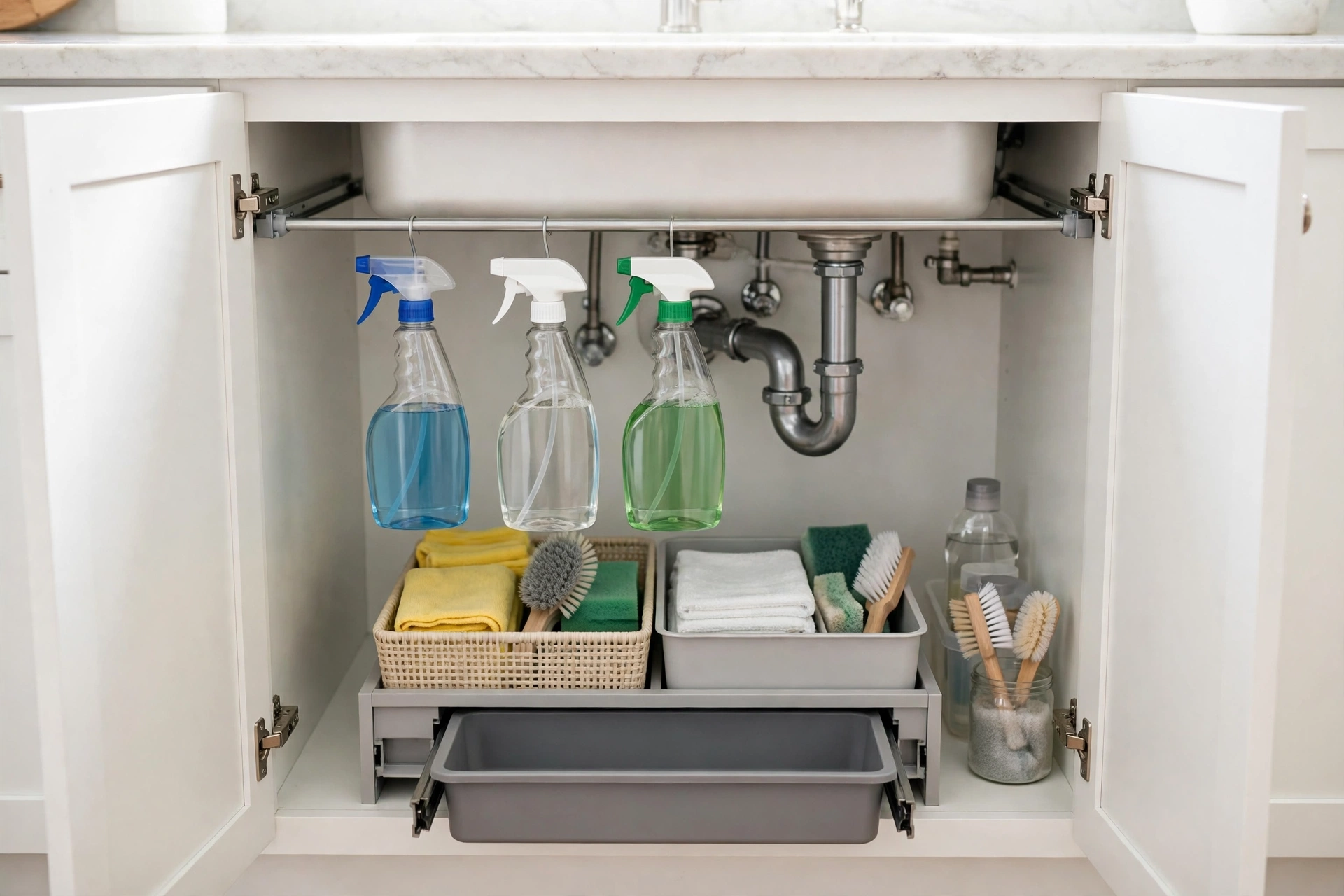
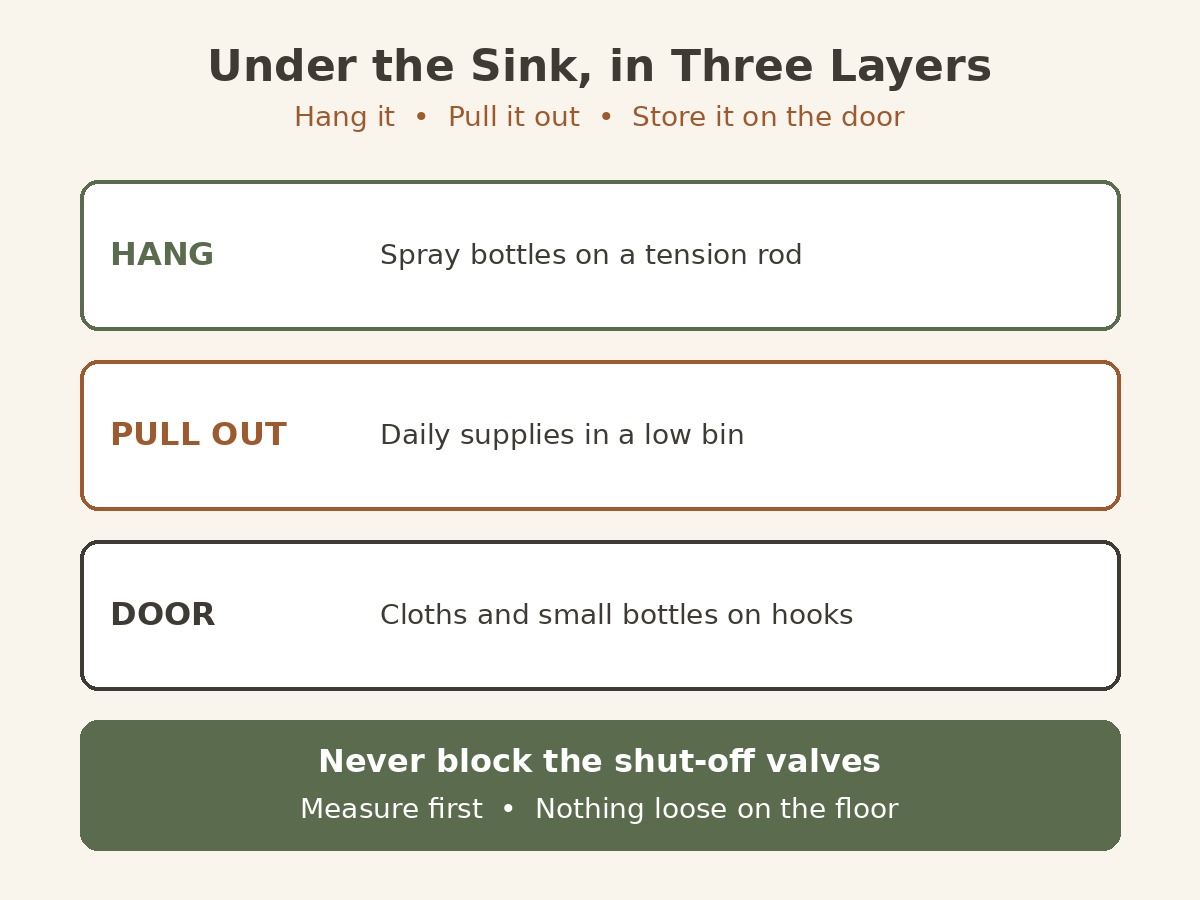
The space under the kitchen sink is the hardest cabinet in the house to organize, because it was never designed for storage at all. Pipes run through the middle, the shut-off valves sit in the way, and anything placed on the floor ends up damp, knocked over, or forgotten. The fix is to stop treating the floor as the only shelf. Use the air above it, the front of it, and the door itself: hang spray bottles from a tension rod, keep daily supplies in a bin you can pull out, and move cloths and small bottles onto the door.
Measure first, and never block the valves. Everything else in this guide follows from those two rules.
Step 1: Clear it and map the pipes
Take everything out, wipe the cabinet floor, and look at what is actually in the way. Note where the trap and supply lines run, where the shut-off valves are, and how much clear height you have on each side of the pipes. A tension rod needs two flat, solid sides to press against; a pull-out bin needs a flat floor and enough clearance to slide without catching a pipe.
While it is empty, sort what came out into three groups: daily (the spray and cloth you reach for every day), weekly (floor cleaner, scrub brushes, refills), and let go (empty bottles, duplicates, cleaners for appliances you no longer own). Daily supplies earn the front and the rod; weekly supplies earn the back bin; the rest leaves the cabinet.
Step 2: Hang spray bottles from a tension rod
A tension rod is the cheapest way to gain a whole extra shelf under the sink, because it uses the empty air above the pipes. Fit the rod across the cabinet, high enough that the bottles hang clear of the bin below but low enough that the triggers do not press against the cabinet top. Hang spray bottles by their triggers, one per hook or directly over the rod, with the most-used bottle nearest the door.
Two cautions. First, do not hang anything heavy: spray bottles only, never bulk containers or tools. A rod that slips under weight will drop everything at once. Second, do not run the rod in front of the shut-off valves. If a leak ever happens, you need to reach those valves in seconds, not after removing a rod and three bottles.
Step 3: Put daily supplies in a pull-out bin
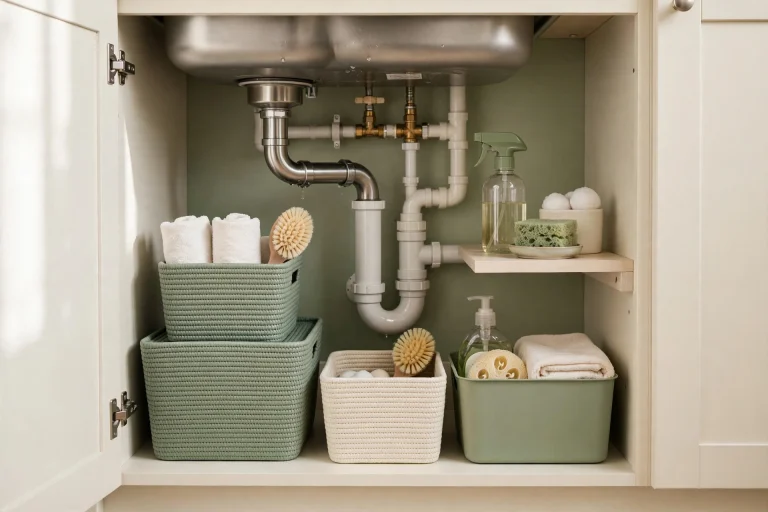
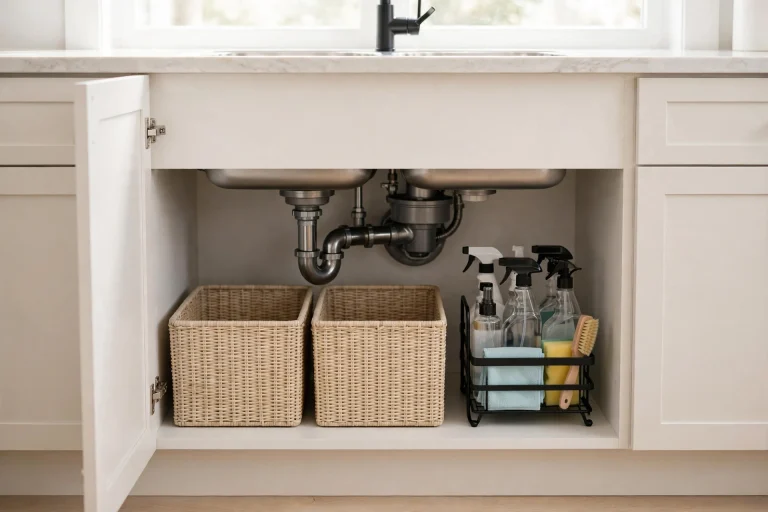
The floor of the cabinet belongs to one low, open bin for daily supplies — not to a row of loose bottles. A bin turns the awkward back of the cabinet into something you can slide out, take from, and slide back, without crouching and reaching past the pipes. Keep it shallow enough to see into, and leave a finger-width of space on each side so it slides freely.
One bin per job, not one bin for everything. A daily bin (all-purpose spray, cloths, sponge) and a separate weekly bin (floor cleaner, scrub brush, refills) stay useful; a single mixed bin becomes the same jumble the cabinet was before, just in a box. Label the bins — “Daily” and “Weekly” is enough — so everyone in the house puts things back in the right one.
Step 4: Use the door for cloths and small bottles
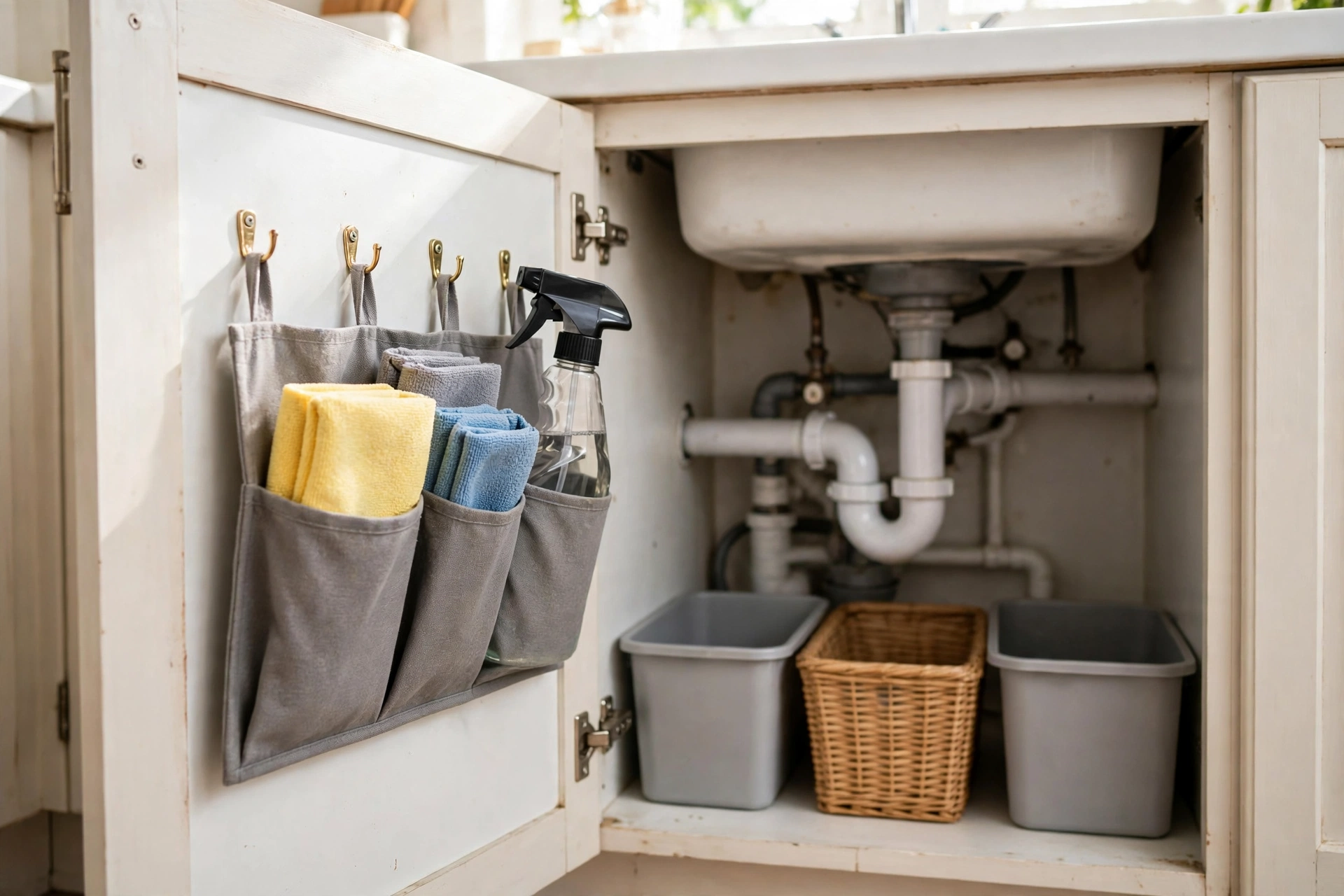
The inside of the cabinet door is wasted space in most kitchens, and it is the best home for the small, flat things that otherwise vanish: cleaning cloths, small spray bottles, gloves, and scrub pads. A row of small hooks or a slim hanging caddy holds them without drilling into the door and without taking any floor space at all.
Check the door closes flat with the caddy loaded. If it bulges or catches, the caddy is too deep — move the bulkiest item to the pull-out bin instead. And keep nothing on the door that would drip onto the hinges or the floor when the door moves.
Step 5: Keep the valves and the floor clear
Whatever system you build, three things stay non-negotiable. The shut-off valves stay reachable at all times, with nothing stored in front of them. Nothing absorbent sits loose on the cabinet floor, where a slow drip turns it into a damp, forgotten mess. And the trap and pipes stay unblocked, so a plumber — or you, in a hurry — can reach them without dismantling your storage first.
Once a month, pull the bins out, check for leaks or damp spots, and return anything that wandered to its own place. Five minutes is enough, and it is the check that catches a slow leak before it damages the cabinet floor.
How this fits the rest of the kitchen
This guide is the second half of the under-sink story. For the full method — working around the pipes, choosing bins by shape, and setting use-first zones — start with How to Organize Under the Kitchen Sink Around Pipes. For the cleaning routine that keeps the rest of the kitchen in the same shape, How to Keep a Kitchen Organized: A Weekly 15-Minute Reset Routine covers the weekly pass that keeps bins, doors and shelves from drifting.
Summary table
| Layer | Best for | Watch out for |
|---|---|---|
| Tension rod | Spray bottles hung by their triggers, using empty air | Light items only; never block the shut-off valves |
| Pull-out bin | Daily supplies slid out past the pipes | One job per bin; mixed bins fail |
| Door storage | Cloths, small bottles, gloves on hooks or a slim caddy | Door must still close flat; nothing that drips |
| Cabinet floor | One low bin, nothing loose | No absorbent items loose on the floor |
| Valves and pipes | Always reachable, always clear | Never store anything in front of them |
Frequently asked questions
Will a tension rod damage the cabinet sides?
No, if it is fitted to a flat, solid surface and not overtightened, and if it carries light spray bottles only. Check it monthly — a rod that has slipped even slightly should be refitted before it drops.
What if my cabinet has no flat sides for a tension rod?
Use the pull-out bin and door storage alone, and hang bottles from a small adhesive hook on the cabinet side or door instead. The three-layer idea still works; only the hanging method changes.
Should cleaning supplies live under the sink at all?
Daily and weekly cleaning supplies, yes, as long as the valves stay clear and nothing sits loose on the floor. Anything you use rarely, or anything heavy, belongs elsewhere.
How do I stop the under-sink cabinet smelling damp?
Keep nothing absorbent loose on the floor, check monthly for slow leaks, and wipe the floor dry whenever you pull the bins out. A damp smell is usually a leak or a wet cloth, not the cabinet itself.
Can I put a bin over the pipes?
No — bins sit on the floor beside or in front of the pipes, never on top of them. Anything resting on a pipe blocks access and risks a leak going unnoticed.
Shop This Guide’s List
Prefer to shop it all in one place? Every product in this guide is collected in our Benable list: Under-Sink Organization That Actually Works: Tension Rods, Pull-Out Bins & Door Storage — tap any item to see it at the store.

One Comment