How to Pack and Store Thanksgiving Leftovers So They Actually Get Eaten
Thanksgiving leftovers fail in the fridge, not on the table. The food is good, there is plenty of it, and then it sits in one giant container at the back of the fridge until nobody trusts it anymore. The fix is decided the night you serve the meal, in about fifteen minutes: cool the food fast, pack it in small containers, label it simply, and put tomorrow’s meal at the front of the fridge.
The rule that governs everything else is time. Leftovers should not sit out while the evening winds down. Pack while the kitchen is already being cleared, not after everyone has gone home. Food left at room temperature for hours is food you will throw away with a clear conscience — and a full bin.
Step 1: Cool it fast, in shallow containers
Hot food cools slowly in a deep container, because the middle stays warm long after the outside feels cool. Spread leftovers into shallow containers instead, so the whole portion cools at once. Sliced turkey, stuffing, and vegetables all cool faster flat than piled up, and they reheat more evenly later for the same reason.
Do not wait for food to cool completely on the counter before packing it. Pack it warm, lid it once the steam has settled, and get it into the fridge within two hours of serving. The fridge is built to handle warm containers; the counter is not a safe holding spot.
Step 2: Pack small, by meal — not by dish
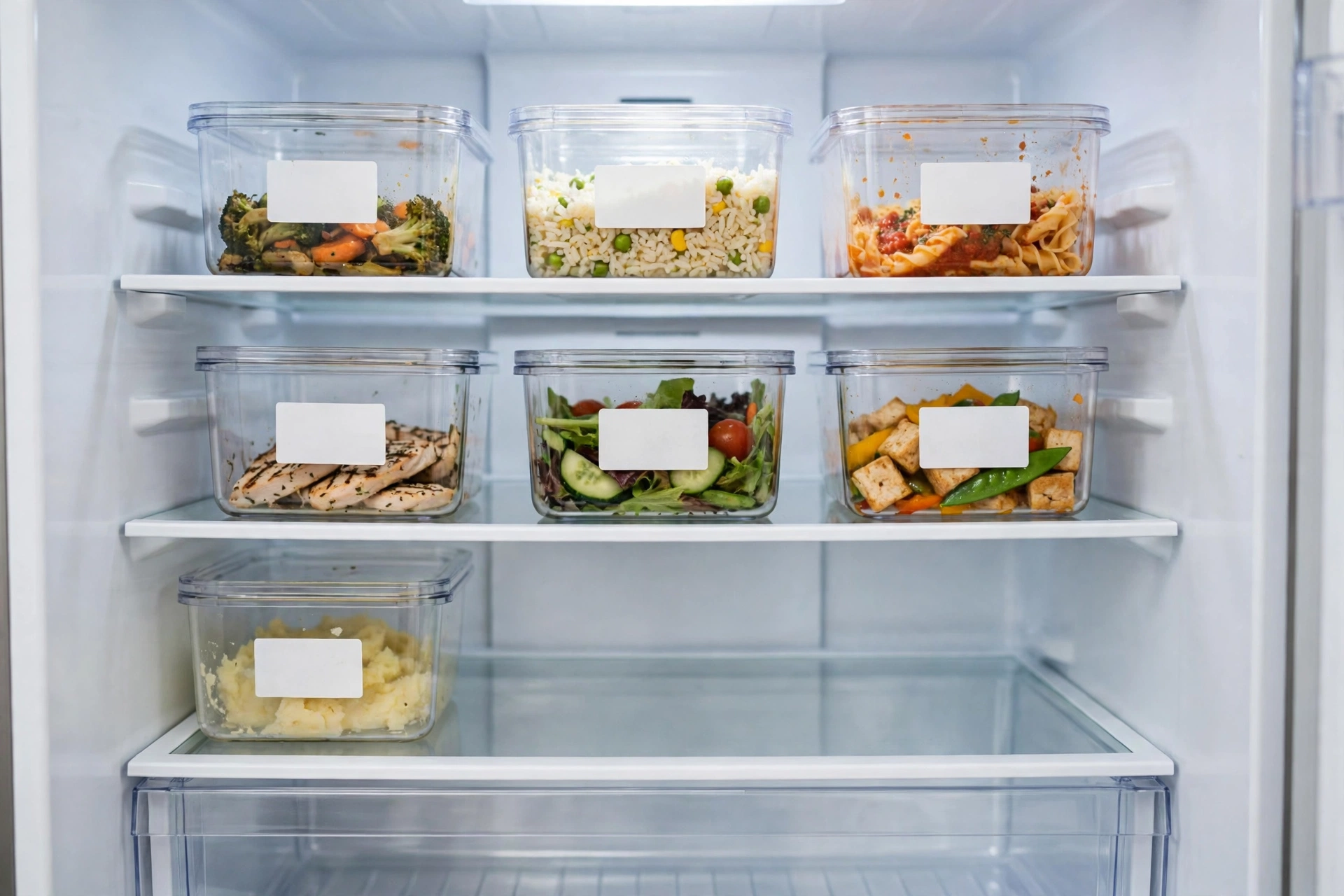
One enormous container of turkey is the reason leftovers go uneaten. Nobody wants to open it, take a portion, and reseal the rest three nights running. Pack by meal instead: one container that holds tomorrow’s lunch, one that holds a full second dinner, and so on. Each container should hold what one meal actually uses, nothing more.
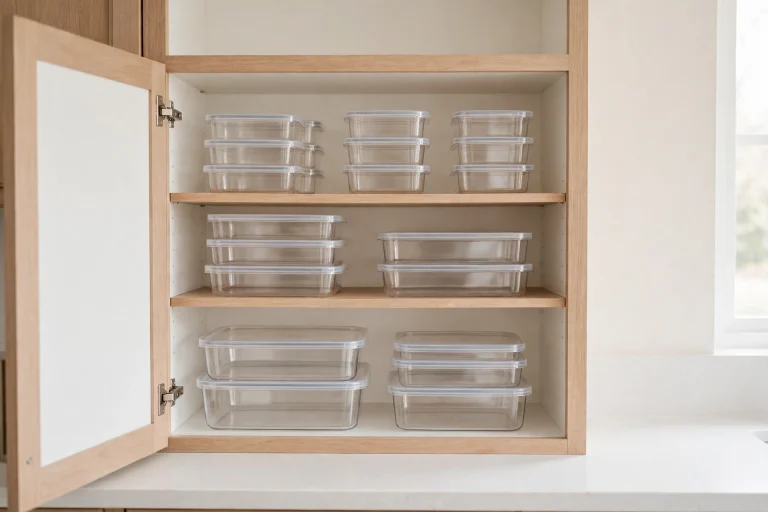
This is also where the container system from our guide to How to Organize Food Storage Containers and Lids earns its keep: matching containers that stack, with lids that file upright, make a fridge full of leftovers easy to see and easy to reach. Mixed sizes with missing lids turn the same job into a hunt. If your containers do not stack, pack fewer, larger meals — a system you can see is a system you will use.
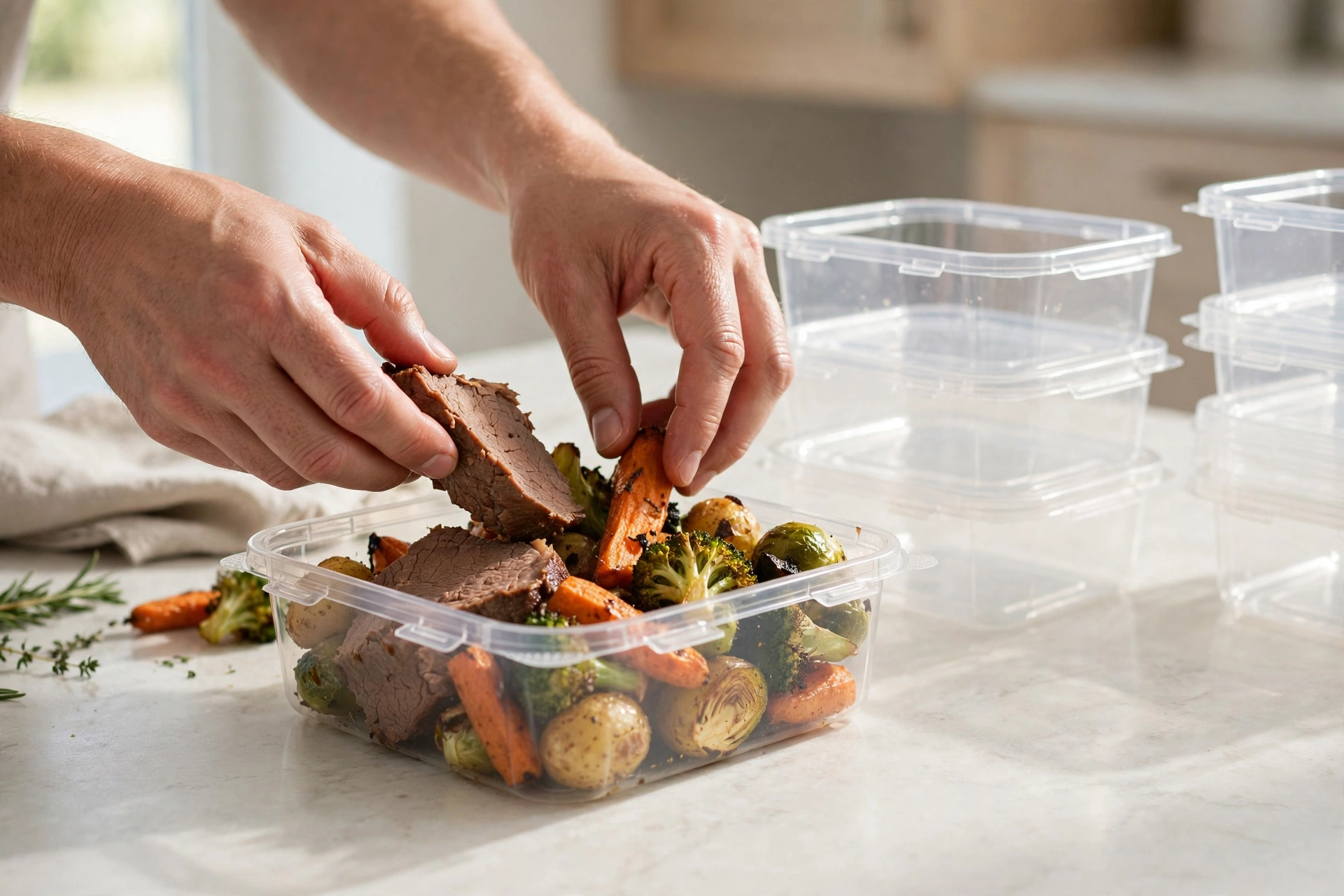
Keep wet and dry foods apart. Gravy goes in its own small container, not poured over everything it might accompany. Cranberry sauce, too. Sauces packed separately stay good longer and let each leftover meal taste like itself, not like everything mixed together.
Step 3: Label with the dish and the day
A container with no label is a mystery by Saturday. Label every container with two things only: what it is, and the day it was packed. “Turkey — Thu” is enough. You do not need a full inventory list, and you do not need to write the date in full — the day is what you will actually check when you open the fridge.
Put the labels where you can read them without lifting the container: on the front, or on the lid if the containers stack. A label on the bottom helps nobody.
Step 4: Put tomorrow’s meal at the front
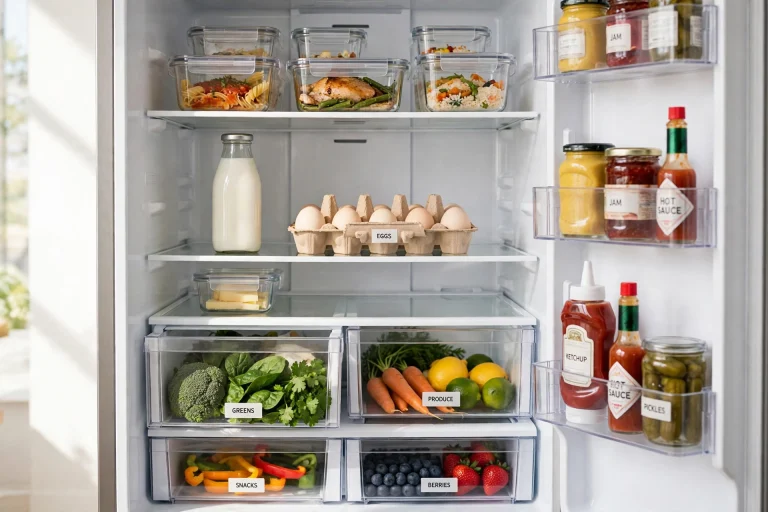
Fridge order decides what gets eaten. The meal you plan to eat next goes at the front, at eye level, where your hand lands first. Everything else goes behind it, in the order you plan to eat it. Food at the back of a deep shelf is food you forgot, and forgotten food is wasted food.
This is the same use-first order used for the fridge itself in our guide to How to Organize Your Fridge (Bins, Zones and What Goes Where): the most-used food lives where it is easiest to reach, and the rest waits its turn. For leftovers week, that means the next meal is never more than one container deep.
Step 5: Freeze the rest on day two, not day five
Not everything needs to be eaten from the fridge. On the day after Thanksgiving, decide what will not be eaten within the next few days and freeze it then — sliced turkey, soups, and cooked vegetables all freeze well in meal-sized portions. Freezing on day two keeps the food at its best; freezing on day five, when you are already unsure about it, just moves the decision to the freezer.
Freeze flat where you can: soups and sauces in flat bags or shallow containers stack neatly and thaw fast. Label frozen portions the same way as fridge ones — dish and day — so the freezer does not become a second mystery box.
What not to do
- Do not leave leftovers out while the evening ends. Pack during clearing-up, within two hours of serving.
- Do not pack one giant container per dish. Pack by meal, in portions one meal actually uses.
- Do not pour gravy over everything. Sauces stay separate, in their own small containers.
- Do not trust memory for labels. Dish and day, on the front, on every container.
- Do not keep everything in the fridge “just in case.” Freeze on day two what will not be eaten in the next few days.
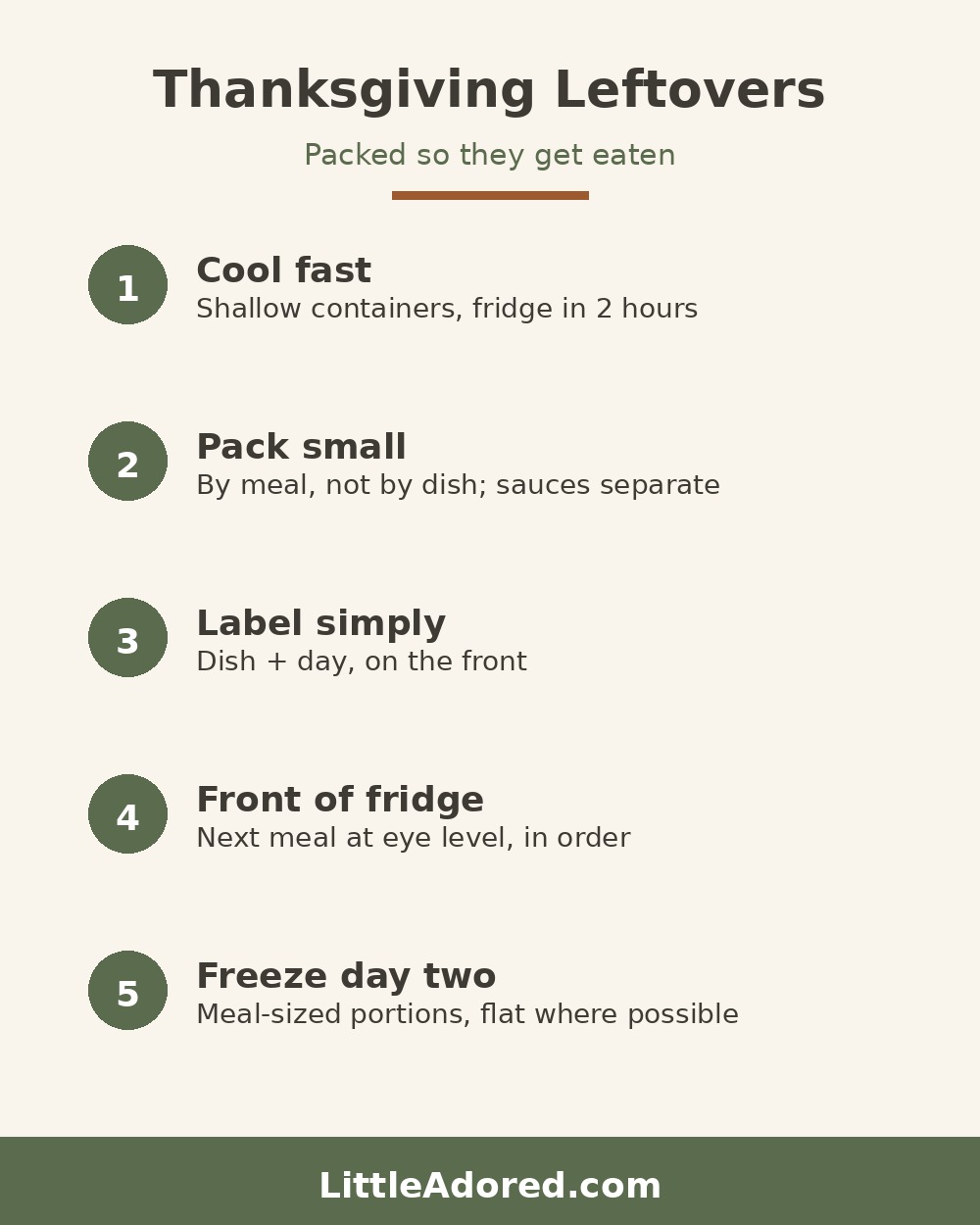
Summary table
| Step | What to do | Result |
|---|---|---|
| 1. Cool fast | Shallow containers, into the fridge within two hours | Food cools evenly and stays safe |
| 2. Pack small | By meal, not by dish; sauces separate | Every container is one real meal |
| 3. Label simply | Dish + day, on the front | No mystery containers by Saturday |
| 4. Front of fridge | Next meal at eye level, in eating order | The next meal is the one you see |
| 5. Freeze day two | Meal-sized portions, flat where possible | Nothing lingers until it is wasted |
Frequently asked questions
How long do Thanksgiving leftovers last in the fridge?
Eat refrigerated leftovers within three to four days. If a portion will not be eaten in that window, freeze it on day two rather than letting it sit until you are unsure about it.
Should leftovers cool completely before going in the fridge?
No. Pack them warm in shallow containers, lid them once the steam settles, and refrigerate within two hours of serving. Waiting for food to cool fully on the counter is the riskier option.
What is the best container size for leftovers?
The size of one meal. A container that holds tomorrow’s lunch or one full dinner gets opened once and finished; a giant container gets opened, resealed, and forgotten.
Can you freeze turkey and stuffing?
Yes, in meal-sized portions, labelled with dish and day. Slice turkey before freezing so it thaws evenly, and freeze sauces separately so each portion tastes like itself when reheated.
How do I stop leftovers being forgotten at the back of the fridge?
Put the next meal at the front, at eye level, and arrange the rest behind it in the order you plan to eat them. If a container is more than one deep, it is effectively hidden.
Your next step
Tonight, pack during clearing-up: shallow containers, one meal each, dish and day on the front, tomorrow’s meal at the front of the fridge. Tomorrow, freeze what will not be eaten within a few days. For the wider system, our guide to How to Organize a Kitchen by Zones (Prep, Cooking, Cleaning, Storage) explains where the fridge sits in the cooking and storage zones, and our How to Keep a Kitchen Organized: A Weekly 15-Minute Reset Routine is the habit that keeps the fridge — and the rest of the kitchen — from drifting back into clutter.
Shop this guide’s list
Shop the containers, labels, fridge bins and freezer portions from this guide in my Benable list: Thanksgiving Leftovers Storage That Actually Gets Eaten.